

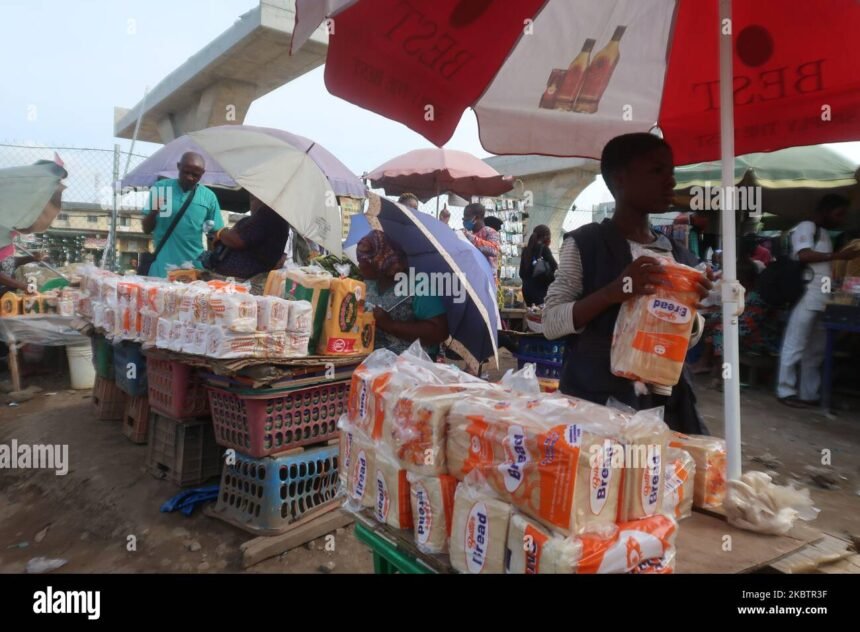

If you walked past the U-Turn junction in Abule Egba around 6:30 a.m., you’ll see a woman in a yellow wrapper sitting behind a rusty wooden table.
That’s Mama Sade.
She doesn’t shout, she doesn’t chase customers like the others, and she definitely doesn’t have a POS. But somehow, her tiny shop always has a queue.
Not because her bread is sweeter – God knows it’s the same agege bread they sell everywhere. But because she makes people feel seen.
I should know, because I was one of those people.
My name is Sade Oladimeji.
I was the “Sade” in “Mama Sade” until life moved me from table to tiled office floors. I now live in Lekki (not rich yet), wear suits, and send emails that start with “Kindly find attached.”
But this story isn’t about the woman I’ve become. It’s about the girl I used to be. And the mother who raised me with bread crumbs and iron will.
I was ten when my father left.
He said he was going to Ghana for “business.”
We never saw him again.
My mother cried for two days, then woke up on the third morning, tied her wrapper, and went outside.
That was the beginning of the bread table.
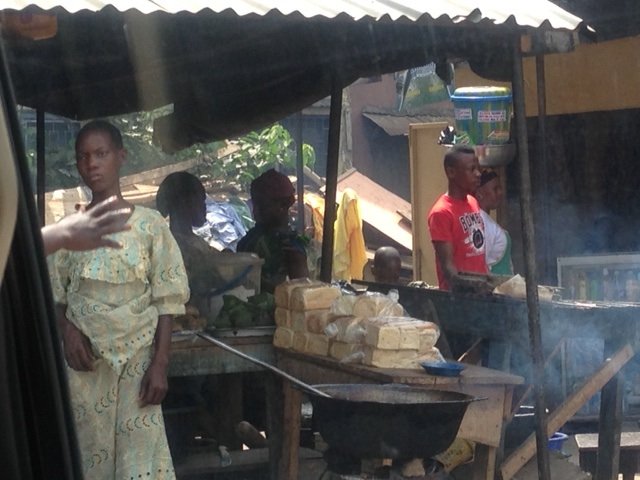
We lived in a face-me-I-face-you compound with ten rooms and twenty mouths. Noise was constant – someone frying akara, someone shouting at NEPA officials, babies crying, and always, always, the sound of someone quarreling over borrowed items.
My mother never complained.
She would wake up before dawn, bathe me in cold water, and send me to fetch “change” from the woman selling soft drinks two streets away. She’d already collected bread from the bakery man on credit. The goal was to sell out, pay him back, and keep the leftover as our profit.
Sometimes, there was no leftover. Sometimes, she’d say, “We go manage, my pikin.” And we did.
I remember one morning clearly.
I was in JSS2. My school had announced “Career Day” and everyone was supposed to dress up like who they wanted to be. I wanted to go as a news anchor. I even practiced in front of the mirror.
“Good evening, my name is Sade Oladimeji, and this is NTA.”
But we didn’t have money for a suit. So my mother gave me her old gele, powdered my face, and told me to say I was a market woman.
I cried the whole walk to school.
When I got home, I slammed the door.
“You don’t get it, Mummy!” I shouted. “You don’t get how embarrassing it is!”
She looked at me, her eyes heavy with tiredness and understanding.
Then she said something I’ll never forget:
“Sade, my job is to make sure you don’t stay here. Embarrassment is for people who have arrived.”
That night, I washed my only socks and did my homework under a flickering lantern. I didn’t say sorry. She didn’t expect me to.
We were both just trying to survive.
Years passed. The bread table remained.
Sometimes, I’d help her wrap loaves in old newspaper. Other times, I’d read my books while she negotiated with tired conductors and sleepy security guards.
One day, something changed.
I got into UNILAG.
We danced and cried. She hugged me so tightly, it hurt. Then she gave me her old Nokia phone and said, “No matter what happens, don’t forget where you started.”
I promised her I wouldn’t.
I left Abule Egba with dreams bigger than the sky.
University wasn’t easy.
I struggled. I did tutorials for extra cash. Shared food with roommates. Used one bra for a whole semester, and what not.
But I graduated. Got a job. Started earning. Started living.
At first, I sent her ₦10,000 every month. Then ₦20,000. Then I started begging her to stop selling bread. She refused.
“Sade, my legs still dey work.”
So I let her be.
I focused on building my own life – career, friendships, trying not to cry in danfo buses during PMS. You know, the Lagos hustle.
Then one Saturday morning, I got a call.
“Mama Sade fainted.”
That was what the voice said. Just like that. She fainted, as in collapsed behind the bread table.
I flew to Abule Egba like a mad person. When I got to the hospital, she was awake but weak. They said it was high blood pressure and stress.
“Your mum needs rest,” the doctor said. “Serious rest.”
I held her hand and cried.
“Mummy, please. Let’s close the shop.”
She smiled. “And who will give people their morning bread?”
I shook my head. “Not you. Not anymore.”
That was two years ago.
Today, the bread table still exists, but it’s not behind her compound anymore. I moved it to a small shop. I hired two women to run it. We now stock bread, eggs, butter, and even hot tea for customers who can’t afford to cook.
But what touches me the most?
People still call her Mama Sade.
They sit beside her, gist with her, sometimes even tell her their worries.
It’s like that table was never just about bread. It was about warmth, familiarity, and maybe a small piece of humanity in a city that often forgets to be kind.
Last week, I walked into the shop to surprise her.
She was sitting at the corner, sipping tea, listening to someone rant about fuel price and Nigeria as a whole.
When she saw me, her eyes lit up.
“My Sade,” she said proudly. “Anchor woman. Bread winner. My biggest customer.”
I laughed. Hugged her.
Then I sat beside her, watching the world pass by, the smell of bread in the air.
And in that moment, I realized:
We didn’t need a big house or luxury shoes to be successful.
We had each other.
And a table that taught me the value of resilience, one loaf at a time.