


Kaduna Cleric Coup Plot Testimony: What Sani Abdulkadir Told the Court
Last Updated: May 12, 2026
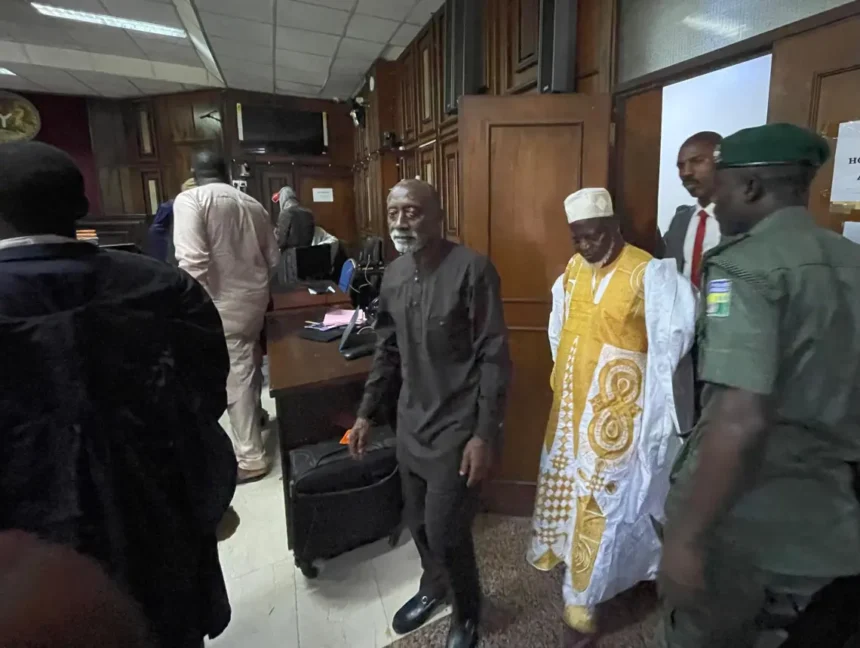
The Kaduna cleric coup plot case took a dramatic turn on Monday when Sani Abdulkadir, the sixth defendant in Nigeria’s high-profile coup trial, admitted on camera that he received money to pray for the success of an alleged operation to overthrow President Bola Tinubu. However, Abdulkadir did not stop there. He also told investigators that he warned the conspirators the plan would fail. This article gives you a full account of his testimony, the broader trial, the legal battles over evidence, and what it all means for Nigeria’s political security.
Who Is Sani Abdulkadir and What Is His Role in the Case?
Sani Abdulkadir is a Zaria, Kaduna State-based Islamic cleric. He is the sixth defendant in charge number FHC/ABJ/CR/206/2026, filed before Justice Joyce Abdulmalik at the Federal High Court in Abuja. The Federal Government arraigned him alongside five others on April 22, 2026. All six defendants pleaded not guilty to the 13-count charge, which includes conspiracy, attempted treason, terrorism, failure to disclose security intelligence, and money laundering. Abdulkadir allegedly retained N2 million from proceeds linked to terrorism financing, according to the charge sheet.
What the Kaduna Cleric Said in the Video Recording
The Kaduna cleric coup plot testimony emerged from a video recording played in court during proceedings on May 11, 2026. The prosecution tendered the footage through its fourth witness, an army officer identified by the codename AAA for security reasons. In the video, Abdulkadir described his role clearly. He told investigators he was introduced to the alleged plot through an intermediary named Sanda, who informed him that his principal, identified as Colonel Mohammed Alhassan Ma’aji, intended to stage a coup and needed spiritual support.
Specifically, Sanda told the cleric that his “Oga” needed prayers and divination regarding the likely success of the operation. Abdulkadir said he carried out the prayers. However, after doing so, he informed the group that the operation would fail because two people involved would betray the conspiracy. Furthermore, he said the plotters then sent a second request, asking for additional prayers to prevent those two individuals from speaking out. Consequently, money was later transferred to him for prayers and charitable purposes, and names of individuals allegedly involved were forwarded for inclusion in the prayers.
How Was the Cleric Eventually Arrested?
Abdulkadir’s arrest came through an unexpected route. He told investigators that he first learnt of the arrests through media reports, after Sanda informed him that Colonel Ma’aji had been unreachable for four days. However, he did not turn himself in. Instead, he visited the Economic and Financial Crimes Commission to resolve restrictions placed on his bank account. When he arrived to withdraw from the transferred funds, he discovered the account had been flagged. An EFCC deputy director then invited him to explain the source of the money. He did so, and his arrest followed. He denied making any coup-related statement in EFCC custody and maintained he was neither assaulted nor tortured during the process.
The Kaduna Cleric Coup Plot Defence: Prayers, Not Conspiracy
Abdulkadir’s central legal defence rests on a clear distinction. He argues that the money he received was strictly for prayers and charity, not for supporting a coup attempt. He acknowledged that he understood a coup meant the forceful military overthrow of a government. In addition, he confirmed he was aware of the alleged plot. However, he argued that he did not report it because he did not know whom to contact. This defence is significant. It attempts to draw a line between spiritual knowledge of an event and active participation in it.
This distinction matters legally because Nigerian law, including the Administration of Criminal Justice Act, requires prosecutors to establish both the act and the intention. The prosecution must prove that Abdulkadir did more than pray and accept payment. It must show that his actions amounted to knowingly aiding or failing to report a treasonable plot. His claim that he actively warned the plotters it would fail adds a further layer of complexity. No competing news report has drawn attention to the fact that his prophecy of internal betrayal appears to have proven accurate: the plot was indeed exposed from within, precisely as he claimed he foretold. This counterintuitive detail strengthens his defence narrative in ways that go beyond a simple denial. You can read more about Nigeria’s governance challenges and how institutions respond to internal threats in our detailed analysis.
Why Did the Cleric Not Report the Alleged Coup Plot?
Abdulkadir’s stated reason for not reporting the alleged plot is that he did not know who to report to. This claim is legally important. Under Nigerian law, specifically Section 43 of the Criminal Code, concealing treason is itself a criminal offence. The prosecution alleges that all six civilian defendants had prior knowledge of Colonel Ma’aji’s plans and failed to alert authorities. Abdulkadir’s admission that he knew of the intended coup but took no action to report it goes to the heart of this charge. His defence must therefore convince the court that his ignorance of reporting channels was genuine and not a deliberate choice to remain silent.
Who Are the Six Defendants in Nigeria’s Coup Trial?
The six defendants standing trial before Justice Joyce Abdulmalik represent a cross-section of civilian and retired military figures. Retired Major General Mohammed Ibrahim Gana heads the list as the first defendant. Erasmus Ochegobia Victor, a retired naval captain, is the second defendant. Ahmed Ibrahim, a serving police inspector, is the third. Zekeri Umoru, an electrician at the Presidential Villa, is the fourth. Bukar Kashim Goni is the fifth. Abdulkadir Sani is the sixth. In addition, former Bayelsa State governor and former Minister of State for Petroleum Resources Timipre Sylva is named in the charge sheet but remains at large.
The defendants face a 13-count charge that includes conspiracy, attempting to commit treason, terrorism, failure to disclose security intelligence, financing terrorism, and money laundering. The charge alleges that the defendants conspired in 2025 to levy war against the state to overawe the President of the Federal Republic of Nigeria. The prosecution is led by Rotimi Oyedepo, Senior Advocate of Nigeria, from the Office of the Attorney-General of the Federation. The Department of State Services has separately been active in high-profile financial and security cases, reflecting its expanded institutional role in Nigeria’s current security environment.
What Is the Role of Colonel Ma’aji in the Alleged Coup?
Colonel Mohammed Alhassan Ma’aji is identified as the alleged ringleader of the coup plot. He is a serving army officer facing a separate court martial alongside other active military personnel. The Defence Headquarters confirmed in January 2026 that an internal investigation established a plan to overthrow President Tinubu, leading to the arrest of 16 military officers. Ma’aji is among those facing military justice proceedings, while the civilians and retired officers face the Federal High Court. The alleged plot first surfaced publicly when Nigeria abruptly cancelled its 65th Independence Day military parade on October 1, 2025, a cancellation later linked in media reports to security concerns about the alleged coup, though the Defence Headquarters initially dismissed those reports. For background on Nigeria’s Department of State Services and its mandate to detect and prevent threats to state security, Wikipedia provides a useful overview of the agency’s constitutional role.
The Legal Battle Over Evidence: Trial Within Trial Explained
One of the most consequential legal developments in the Kaduna cleric coup plot case is the dispute over the admissibility of the defendants’ extrajudicial statements. After playing the video recordings, the prosecution moved to formally tender written statements made by all six defendants before a special investigation panel and military police authorities. All six defence counsels immediately objected.
Their grounds were wide-ranging and substantial. First, they argued that investigators failed to inform the defendants of their right to legal representation before taking statements. Second, they identified discrepancies between the video recordings and the corresponding written statements. Third, several defendants alleged coercion, inducement, and torture during the statement-taking process. Fourth, they argued that the recordings did not adequately show the physical condition of the defendants at the time of recording, making it impossible to assess whether the statements were freely made. In addition, counsel to the fifth defendant argued that the court should hold separate trial-within-trial proceedings for each defendant rather than a combined hearing, given the number of accused persons and the distinct nature of each objection.
What Is a Trial Within Trial and Why Does It Matter?
A trial within trial is defined as a separate proceeding conducted within the main trial to determine whether a disputed statement or piece of evidence was obtained voluntarily and in compliance with the law. Nigerian courts use this procedure under the Administration of Criminal Justice Act when defendants challenge the admissibility of confessional statements. If the court finds that a statement was obtained through coercion or in breach of the defendant’s rights, that statement is excluded from evidence entirely. This can significantly weaken a prosecution’s case, particularly when video and written confessions form the core of the evidence.
Justice Abdulmalik ruled in favour of a single joint trial within trial covering all six defendants together. The prosecution had argued that the law does not require separate proceedings and that the presiding judge holds discretion over how evidence is received. The judge agreed. This ruling is procedurally efficient but will require the court to carefully distinguish the specific objections raised by each defendant’s counsel within a single hearing. The outcome of this trial within trial will determine whether the most powerful evidence against all six defendants, their own recorded words, is even placed before the court. Observers of Nigeria’s political and institutional landscape in 2026 will recognise that the outcome of this trial carries implications well beyond the courtroom. For the international legal framework governing fair trial rights in cases involving national security, Amnesty International’s guidelines on detention and fair trial standards provide authoritative context on what defendants are entitled to under international law.
Key Takeaways From the Kaduna Cleric Coup Plot Case
First, the Kaduna cleric coup plot case confirms that the alleged conspiracy extended into Nigeria’s religious and spiritual networks, not just its military and political circles. Second, Abdulkadir’s admission that he was paid but simultaneously warned the plotters of failure creates a legally complex defence that prosecutors must directly address. Third, the trial within trial over statement admissibility is the next critical battleground; if those statements are excluded, the prosecution’s case weakens considerably. Fourth, with Timipre Sylva still at large and a parallel court martial running for military personnel, this trial is only one strand of a much broader accountability process.
Therefore, follow this case closely if you are tracking Nigeria’s security, governance, or judicial developments in 2026. Share this article to help others understand the full picture of the Kaduna cleric coup plot proceedings. Bookmark this page for updates as the trial within trial hearings begin and the court moves toward deciding the admissibility of each defendant’s statements.