


National succession planning defines stable governance
Last Updated: May 12, 2026
National succession planning remains one of the biggest missing links in governance across many developing states. Countries that build strong institutions usually prepare future leaders, protect long-term policies, and preserve national consensus beyond elections. In contrast, states without continuity often struggle with unstable economies, weak institutions, and policy reversals. This article explains why national succession planning matters, how successful nations manage leadership transitions, and what African democracies can learn from global governance systems.
Governance experts increasingly agree that countries succeed when leadership transitions follow clear institutional principles. Furthermore, nations with long-term planning frameworks often outperform states that depend on individual political personalities. The issue extends beyond politics because it affects education, security, economic growth, and investor confidence.
Why succession planning matters in national development
National succession planning is defined as the deliberate preparation of future leadership and policy continuity inside state institutions. Effective succession systems ensure that governments maintain strategic goals despite electoral changes.
For example, countries such as Germany, Sweden, and Singapore maintain stable national visions across multiple administrations. Consequently, investors trust their institutions and citizens benefit from predictable governance. In contrast, many African states frequently abandon development projects whenever new governments assume office.
The same institutional challenge appears in political disputes surrounding party discipline and peaceful political transitions. Stable democracies depend heavily on continuity, internal order, and respect for institutional rules.
How national succession planning strengthens democracy
National succession planning strengthens democracy by reducing uncertainty during leadership transitions. Countries with strong systems usually experience fewer political crises after elections. Moreover, public institutions continue operating even when governments change.
One overlooked reality deserves attention. Many developing nations focus heavily on elections but invest too little in institutional continuity. Elections alone cannot build strong democracies without stable governance structures behind them.
What separates stable democracies from unstable states?
Stable democracies rely on unwritten national agreements that survive political competition. These agreements often include economic priorities, constitutional values, and institutional protections accepted across party lines.
The United Kingdom offers a strong example. According to the Encyclopaedia Britannica profile on the United Kingdom, post-war Britain built consensus around welfare systems, parliamentary stability, and institutional continuity. As a result, successive governments maintained core national structures despite ideological differences.
Germany follows a similar model. The country combines government coordination, private sector cooperation, and labour participation to sustain economic strength. According to the OECD governance research portal, institutional trust increases when governments maintain predictable policy frameworks over long periods.
Why Africa struggles with leadership continuity
Africa continues to face governance challenges because many states still lack durable institutional frameworks. Consequently, leadership transitions often trigger policy reversals, weakened institutions, and administrative instability.
Several African governments introduced ambitious reforms after independence. However, many abandoned long-term national visions once political leadership changed. This pattern created economic inconsistency and weakened public confidence.
How policy reversals damage economic growth
Policy reversals discourage investment because businesses prefer predictable environments. Investors rarely commit long-term capital when governments frequently change national priorities. Therefore, succession planning directly affects economic performance.
My observation from studying governance patterns across developing economies is clear. Countries that maintain twenty-year national frameworks usually achieve stronger infrastructure growth than states driven by short election cycles. This practical governance reality receives less public attention than campaign politics, yet it shapes national prosperity more than election slogans.
Political uncertainty also contributes to wider instability. Reports about leadership disputes inside political parties and mass resignations within party factions demonstrate how weak institutional management can escalate tensions.
What countries can learn from China and India
China and India show how long-term governance planning can support national development. Although both countries follow different political systems, they prioritise continuity in strategic planning, public administration, and institutional training.
China’s public service structure evolved around administrative continuity and long-term planning. In addition, India maintained many institutional systems despite political changes after independence.
Can strong civil services improve governance outcomes?
Strong civil services improve governance because experienced administrators preserve institutional memory. Effective bureaucracies help governments implement policies consistently across multiple administrations.
According to the World Bank governance overview, capable public institutions remain essential for sustainable development, poverty reduction, and political stability. Nations that invest in administrative competence usually achieve stronger long-term outcomes.
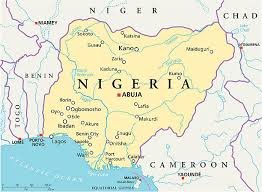
Nigeria and several African states can benefit from this lesson. Rather than rebuilding policies every election cycle, governments should develop permanent national frameworks tied to education, infrastructure, energy, and industrial growth.
How national succession planning can improve Nigeria
National succession planning can improve Nigeria by creating policy continuity beyond individual administrations. The country needs stronger institutional agreements on education, energy, security, and industrialisation.
First, political parties must prioritise ideology and long-term policy goals instead of personality-driven campaigns. Next, governments should strengthen merit-based public service recruitment. Finally, leaders must protect institutions from excessive political interference.
What practical reforms should Nigeria prioritise?
Nigeria should prioritise leadership development, policy continuity laws, and stronger public institutions. Furthermore, universities and civil service academies should train future administrators in governance planning and institutional management.
Readers can also explore how leadership transitions affect broader political structures through discussions on future presidential decisions and political consultations. Governance stability depends on preparation, institutional trust, and long-term planning.
The core lesson remains simple. Countries rarely achieve lasting prosperity without institutional continuity. National succession planning creates stability, strengthens democracy, and improves economic confidence. Policymakers, party leaders, and citizens should treat long-term governance planning as a national priority rather than a political slogan.