

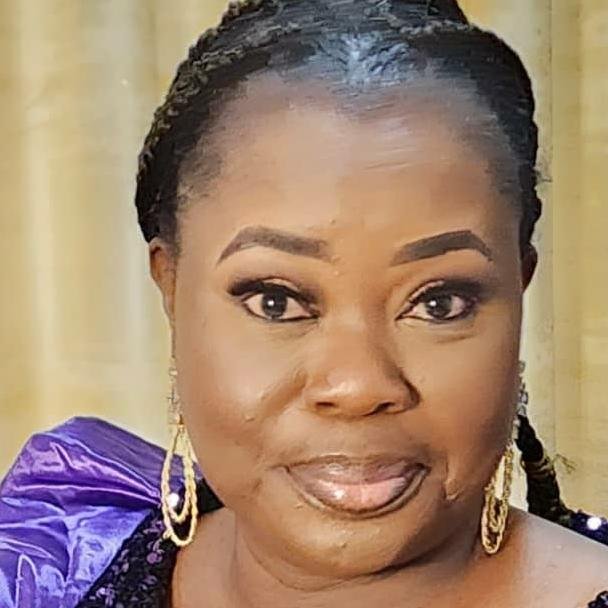

By Funke EGBEMODE
(egbemode3@gmail.com)
I was a slim teenager on August 15, 1983 but what I saw was fat and unforgettable.
I came close, chest-to-chest close, to death. A big box containing my parents’ certificates, documents was on my head when they stopped me.
With eyes red from rage and other things, they belowed at me.
I explained, tears in my eyes and voice.
The streets were empty.
Residents of Ikirun, in today’s Ifelodun Local Government Area of Osun State were all behind doors. Only ‘the boys’ were on patrol.
The sky was dark from smoke of burning houses, sawmills, shops.
My father’s Action Group identity card was our get-out-of-tragedy card. And yes, my father was a politician years before I was born and he could have lost everything that day.
Our landlord, Alhaji Atanda, was not so lucky. He lost houses and sawmills. The drums of palm oil that his wife just took delivery of were kicked on to their sides until there was a big red pool of red oil.
He, I believe, also lost the will to live because he locked himself up in his burning house. His friends had to break doors to pull him out.
My knees shaking and heart panting so loudly I thought it was going to jump out and run on its own legs.
I saw flashing blades of newly sharpened cutlasses.
I saw blood. I saw and felt fear.
I heard screams of pain and despair.
I saw destruction of property and livelihood, the kind that made the owners give up on life.
What was the occasion? Was it a war? Yes and No. A communal war? Yes, a war where brothers forgot they were brothers because they wore different party emblems. It was supposed to be just an election, governorship election but the two leading political parties, the Unity Party of Nigeria (UPN) and the National Party of Nigeria (NPN) turned a simple contest into a bloodbath that left in its trail widows, widowers, orphans and painful gnashing of the teeth. It was a terrible season.
August 15, 2026, 43 years after that day of pain and sorrow, history beckons again, with another two leading parties in a governorship race in Osun State, I am just wondering and worried. Imagine the coincidence! The governorship election held on August 13, 1983. The trouble announced itself on August 15, 1983 after a radio broadcast by a politician. Another August 15 is almost here. And another politician has spoken, his hands on the two legs of a soundly sleeping ghost!
According, to George Santayana, those who cannot remember the past are condemned to repeat it. In Osun, are those who should remember 1983 remembering it correctly? Or they think it was reality TV that must have a Season 2 in 2026?
There are statements that should never come from the lips of a governor, a leader.
There are memories that responsible leaders should never awaken.
And there are ghosts that should be left in their graves, like the 1983 ghost.
As Osun prepares for the August 15 governorship election, political temperatures have risen, with accusations and counter-accusations between the major camps over violence, intimidation and alleged plots to influence the outcome. Against that backdrop, reports that Governor Ademola Adeleke invoked the possibility of “1983” if the election is not properly conducted have naturally stirred anxiety because that year occupies a painful place in the political memory of old Oyo State and in the hearts of victims like me.
Young Nigerians may not understand why older people suddenly became uncomfortable as soon as after-election violence is mentioned. It is not because people of my generation saw it, saw fathers being pushed into a burning house. The smell of burning and burnt human flesh scars you forever.
Those who were born after the dust settled may think 1983 is just another year in a history book.
It is not.
It is a scar.
It is a wound.
It is a cemetery of dreams.
It is a reminder that democracy can bleed and go into coma.
Old Oyo State was not just Oyo as we know it today. It included what is now Osun State. When old men in Ilesa, Ikirun, Iragbiji, Ororuwo, Ila, Ife, Ede, Iwo, Ogbomoso, Ibadan, Saki or Oyo mention “1983,” they are not discussing politics. When the people of Owo, Ado Ekiti, Akure, Ondo remember 1983, what rushes through their minds is a lot.
They are remembering fear.
They remember sleeping with one eye open.
They remember mothers hiding children under beds.
They remember fathers refusing to light lanterns at night.
They remember the smell of burning buildings.
They remember neighbours becoming enemies because they belonged to different political parties.
They remember families divided forever.
I, Olufunke, remember the night my family distributed our belongings in the homes of daddy’s friends and former school mates and we the children slept on top of our boxes and bags, all six of us. I must not put into words what I think of those who want to make the 1983 demons walk through Osun, again!
The 1983 election remains one of the darkest chapters in the history of Western Nigeria.
That governorship election that pitted the late Chief Bola Ige against the late Dr. Victor Omololu Olunloyo ended in bitter controversy. Allegations of manipulation filled the air waves the morning after. Before you could say ‘Up Awo’, old Ondo and the old Oyo states became battlefields. Streets became war zones.
People stopped arguing with words. They started arguing with fire, cutlasses and juju.
The violence that followed consumed homes, businesses and lives. Political offices were attacked. Property went up in flames. Communities that had lived peacefully suddenly found themselves trapped in cycles of revenge. Historians regard the post-election unrest in old Oyo and neighbouring areas as one of the crises that weakened the Second Republic before the military coup of December 31, 1983.
Eventually, it became clear that nobody truly won. Not Bola Ige. Not Victor Olunloyo, Not Lekan Balogun. Certainly not Adekunle Ajasin and Akin Omoboriowo; not UPN or NPN, most certainly not the ordinary people.
History has a cruel sense of humour like that.
The politicians eventually moved on and later became friends once again.
Many of the victims never recovered.
That is why leaders should choose their words carefully. Political speeches are not ordinary conversations.
They are like struck marches. Sometimes they fall on wet ground.
Sometimes they fall inside a petrol station.
In an atmosphere already charged with allegations of attacks, destruction of campaign materials and fears of electoral violence, every word from political leaders carries enormous weight. Public appeals from different stakeholders—including security agencies and peace initiatives—have consistently urged all parties to avoid inflammatory rhetoric and commit to peaceful conduct before, during and after the election.
No election is worth another widow. Governorship seats should not be erected in blood. Nobody deserves to become an orphan because someone wants to serve his state.
No political office is valuable enough to justify another generation growing up with stories of fathers who never returned home.
This is not about one political party. This is about wisdom, fairness and fear of God.
It is not about whether you support Accord, APC or any other platform.
It is about whether we have learnt anything from history.
Leadership demands restraint.
A governor’s greatest responsibility is not merely to seek votes.
It is to lower the political temperature.
When followers hear a leader mention a tragic historical event, some may interpret it as a warning.
Others may hear it as a prediction.
The reckless ones may even mistake it for permission – or an order.
That is why words matter.
One careless sentence can travel faster than a convoy of security vehicles.
One reckless speech can do more damage than hundreds of thugs.
Those who witnessed 1983 are now grandparents.
Some still lower their voices when telling those stories.
Some still remember where they hid.
Some still remember the neighbour whose shop was burnt.
Some still remember the family that fled overnight and never returned.
Some still remember the smoke, the screams and the burnt bodies.
Many of today’s politicians were children then. Many of today’s voters were not even born.
That is precisely why those memories should educate us—not recruit us.
If there is any lesson from 1983, it is that electoral victories are temporary.
The pain of violence is permanent.
Governors come and go.
Senators come and go.
Political parties change names.
But widows remain widows. Orphans remain orphans.
Burnt houses do not rebuild themselves.
The houses destroyed in my hometown were empty until the owners saved up enough money to rebuild themselves.
A destroyed economy does not recover overnight.
Trust, once broken between neighbours, may take generations to heal.
Osun has earned a reputation over the years for producing scholars, judges, teachers, first rate journalists, artists, artistes, engineers and public servants.
Let it also become known as the state that refused to repeat history.
The greatest victory on August 15 will not be who occupies the Government House.
The greatest victory will be if every voter returns home safely.
If no mother waits endlessly for a missing son, if no child sleeps in a displaced person’s camp because politicians could not control their tongues and ire.
If no hospital receives victims of avoidable clashes, that would be the sweetest victory.
Politicians must remember that elections last only one day.
Governance lasts years.
History lasts forever.
The generation that witnessed 1983 has already paid the tuition fees.
They learnt the lesson with blood and tears.
Must today’s generation pay the same fees again?
I hope not because nations that keep repeating painful history eventually become prisoners of it.
And Osun deserves better.
Nigeria deserves clear-headed leaders who will not afflict them with irreversible damages.
May August 15 produce ballots and not bullets.
May it produce winners instead of widows.
May it produce celebration and not sorrow.
And on a last note, anyone who threatens me with the ghosts of 1983 can never be my friend. Yes. Let that ghost rest in peace, finally.