

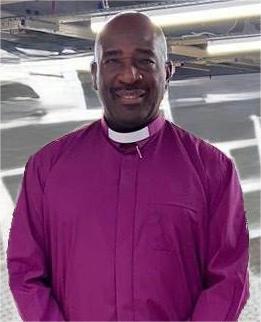
By Pastor Yomi OGUNTUWASE
(yomioguntuase@gmail.com, +447946506659)
1.Isaiah 28:18 KJV
And your covenant with death shall be disannulled, and your agreement with hell shall not stand; when the overflowing scourge shall pass through, then ye shall be trodden down by it.
Spiritual application
• In the New Testament light, this points to spiritual death meaning the judgement of God:
• “The soul that sins shall die” (Ezekiel 18:4)
• “The wages of sin is death” (Romans 6:23)
So, the covenant with death = humanity’s binding relationship to sin → law → death.
2. What kind of death? Spiritual death
• This is not merely physical death.
3. The Law as the “ministration of death”
Scripture teaches that the Law itself is not evil, but its effect on sinful humanity produces death meaning judgment that comes from violating the law :
• 2 Corinthians 3:7 – “The ministry that brought death… engraved in letters on stone”
• The Law:
• Reveals sin
• Exposes guilt
• Condemns the sinner
Therefore, the Law activates the covenant with death by giving sin legal power.
4. Why sin wasn’t “counted” before the Law (Romans 5:13)
“Sin is not charged against anyone’s account where there is no law.”
This means:
• Sin existed before Moses
• But the Law formalized sin as a legal offense
• Once the Law came, you get your wages which is death because sin was being accounted for. Sin produced judgement which is death.
So:
• Law → gives sin power
• Sin → produces death
5. The sting of death explained (1 Corinthians 15:56)
“The sting of death is sin, and the power of sin is the law.”
This shows the chain clearly:
1. The Law empowers sin
2. Sin empowers death
3. Therefore, death’s authority depends on the Law
Remove the Law’s authority → death loses its legal claim.
6. Christ rescues us from the curse of the Law (Galatians 3:13)
“Christ has rescued us from the curse pronounced by the law.”
Key truth:
• The Law doesn’t just reveal sin—it pronounces a curse
• Jesus took that curse on Himself at the cross
So:
• If the curse of the Law is removed
• Then the covenant that enforced death is broken
7. How was the covenant with death annulled? (Ephesians 2:15)
“By ending the system of law with its commandments and regulations…”
Christ did NOT:
• Destroy God’s righteousness
He DID:
• Fulfill the Law
• End its role as a system of condemnation
This means:
• The Law no longer stands as a legal contract against the believer
• Therefore, death has no covenantal authority
8. From death to life
You correctly imply John 5:24:
“You have passed from death to life.”
Because:
• No Law condemning you
• No curse hanging over you
• No legal power for sin
• No covenant with death
9. Final summary
• The covenant with death is the legal relationship between:
• Sin
• The Law
• Condemnation
• The Law gives sin power
• Sin gives death authority
• Christ:
• Took the curse
• Ended the Law as a condemning system
• Annulled the covenant with death
10. Anything that brings death has been annulled in my life
Because the covenant with death has been annulled in Christ, this leads to a bold confession:
Anything that brings death has been annulled in my life.
This is not denial of reality, but a covenantal truth:
• Death only operates where it has legal authority
• In Christ, that authority has been removed
11. Two laws / two spiritual operating systems (Romans 8:2)
“For the law of the Spirit of life in Christ Jesus hath made me free from the law of sin and death.”
Paul identifies two governing laws:
a. The Law / Spirit of Sin and Death
• Operates through the Mosaic Law
• Empowers sin
• Produces condemnation and death
b. The Law / Spirit of Life
• Operates in Christ
• Produces freedom, righteousness, and life
• Overrides the former law completely
Just as natural laws override others (like aerodynamics over gravity), the Spirit of life in Christ supersedes the law of sin and death.
12. Freedom From the Spirit of Death
Your statement is accurate in Pauline theology:
• There is a spirit/law of death
• There is a Spirit/law of life
In Christ:
• You are set free from the spirit of death
• Death no longer governs your destiny
• Condemnation has lost its voice
This aligns directly with Romans 8:1:
“There is therefore now no condemnation to them which are in Christ Jesus.”
13. No judgment, no condemnation, no curse
Because:
• The curse of the Law has been borne by Christ
• The Law itself no longer holds you
• The covenant with death has been annulled
Therefore:
• No judgment can legally be pronounced against you
• No condemnation can stand
• No curse can successfully come to pass in your life
Anything attempting to bring death has no legal ground.
14. Delivered from the law that held us (Romans 7:6, KJV)
“But now we are delivered from the law, that being dead wherein we were held…”
Key phrase: “wherein we were held.”
This means:
• The Law functioned as a prison
• It held us under obligation, guilt, and penalty
• As long as we were under it, consequences were unavoidable
But now:
• We are delivered
• Released
• Relaxed from its demands and penalties
15. Why this matters
If we were not delivered:
• The Law would still demand punishment
• Sin would still have power
• Death would still claim its wages
But because we are delivered:
• The Law cannot accuse
• Sin cannot dominate
• Death cannot enforce its claim
16. Final integrated declaration
• My covenant with death has been annulled
• I am free from the curse of the Law
• I live under the law of the Spirit of life
• Anything that brings death has been annulled in my life
• There is no condemnation, no judgment, and no curse over me
• I have passed from death to life in Christ
17. Sin has no dominion (jurisdiction) over you – Romans 6:14
“For sin shall not have dominion over you: for ye are not under the law, but under grace.”
The word dominion here is not merely about behavior or influence — it speaks to legal authority and jurisdiction.
What this means:
• Sin can only demand justice where there is law
• Jurisdiction belongs to the legal system under which a person stands
Because:
• You are not under the law
• You are under grace
Therefore:
• Sin has no jurisdiction
• It cannot prosecute
• It cannot demand punishment
• It cannot enforce penalties
This is why sin loses its power when the Law loses its authority.
18. Why the Law cannot demand justice
Justice can only be demanded when:
• A valid law exists
• A person is under that law
• A violation has occurred
But in Christ:
• The Law no longer governs you
• Its curse has been exhausted at the cross
• Its legal reach has ended
So:
The Law has no standing in your life.
19. God rejects the accuser’s case – Zechariah 3:2
“The LORD said to Satan, ‘The LORD rebuke you…’”
In Zechariah 3:
• Satan’s accusations were factually correct
• Joshua the high priest was indeed unclean
Yet:
• God did not argue the facts
• God rejected the accusations outright
Why?
• Because God Himself had chosen Joshua
• And provided clean garments in place of the filthy ones
This is a prophetic picture of justification in Christ.
20. What this means for the believer
Even when accusations are:
• Technically accurate
• Based on past sin
• Legally sound under the old system
God says:
“I reject your accusations.”
Why?
• The believer is no longer under that jurisdiction
• The Law no longer governs the case
• Christ has already satisfied justice
21. No legal ground for condemnation
Putting it together:
• No Law governing you
• No jurisdiction for sin
• No standing for accusations
• No covenant with death
• No enforceable curse
So:
• Satan can accuse
• But God dismisses the case
• Heaven recognizes no valid charge
22. Final integrated declaration (expanded)
• I am not under the law, but under grace
• Sin has no dominion, no jurisdiction, and no authority over me
• The Law cannot demand justice from me
• The covenant with death has been annulled
• I live under the law of the Spirit of life in Christ Jesus
• Anything that brings death has been annulled in my life
• God Himself rejects every accusation brought against me
• There is no condemnation, no judgment, and no curse over my life
*Oguntuase, a nutritionist and a reflexologist, is a Pastor of Christ in Me Ministry, Windsor UK.