

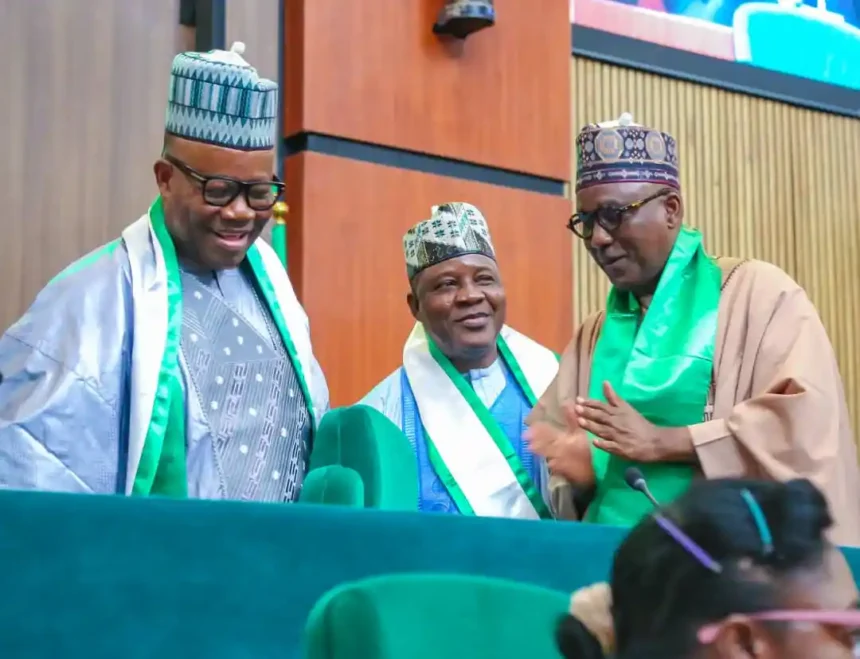
The Speaker of the House of Representatives, Tajudeen Abbas, has disclosed that the House is considering reserving 10 percent of elective seats in the National Assembly for women, and 5 percent for persons with disabilities (PWDs), as part of the ongoing constitutional amendment process.
Abbas made this known on Tuesday during the Second Legislative Open Week of the House of Representatives. He said the proposed reserved seats would carry equal rights, privileges, and committee responsibilities as those of other lawmakers—ensuring full integration into the legislative process.
Giving further insights into the constitutional reform, Abbas said:
“We are considering 109 amendment bills across various sectors, including electoral, judicial, legislative, and inclusive governance.
“Twelve electoral reform bills address scheduling all general elections on a single day, establishing independent candidacy, and creating a dedicated commission for local government elections. Judicial reforms encompass 21 bills designed to streamline appellate processes and strengthen judicial independence.”
He noted that a key proposal on inclusive governance is the introduction of constitutionally guaranteed reserved seats for women and PWDs.
“Under the draft amendment, ten percent of seats in both the Senate and the House of Representatives would be set aside for women, apportioned by state to ensure regional balance,” he said.
According to the Speaker, these seats would be filled through direct elections on separate ballots, with staggered terms to promote continuity and mentorship. For PWDs, five percent of seats would be reserved, with candidates nominated by accredited disability advocacy organisations.
Abbas highlighted Nigeria’s poor history of female representation in governance, stressing the urgency of reform:
“At independence in 1960, women occupied less than one percent of seats in the National Assembly. By 1990, it rose only to two percent. In 1999, women held 3.9 percent of House seats and four percent in the Senate. Today, despite making up half the population, women’s representation remains almost unchanged.”
He cited examples of Rwanda and Senegal, where constitutional provisions raised female representation from below five percent to over 30 percent in one electoral cycle.
“By embedding reserved seats into our Constitution, we will break the cycle of stagnation,” Abbas said. “This mechanism will accelerate progress toward gender parity, enrich legislative debates, and ensure the National Assembly reflects the people it serves.”
He assured of strong collaboration with state assemblies and stakeholders to ensure the passage of the bill.
Reviewing the legislative performance of the 10th House so far, Abbas revealed that between June 2023 and June 2025, the House introduced 2,263 bills—1,478 of which have passed Second Reading. Of these, 237 have been passed and forwarded for presidential assent, with 55 already signed into law.
Some key laws signed include the Tax Reform Laws (Nigeria Tax Act, Tax Administration Act, Nigeria Revenue Service Act, Joint Revenue Board Act), the Electricity Act (Amendment) 2023, and the Student Loans (Access to Higher Education) Act 2024.
The House has also received 621 citizen petitions, 24 of which have been concluded, with 30 dismissed and the rest under review.
Abbas said the House will continue to pursue security sector reform, state policing, devolution of power over natural resources, and legislative oversight to ensure good governance.
“Four human rights bills aligning with international standards are also under consideration,” he added.
On executive-legislative relations, Abbas commended President Bola Tinubu’s willingness to consult and engage with the National Assembly.
“His respect for the legislative arm has strengthened democratic governance,” the Speaker said.
READ ALSO:
- Lagos Railway, Energy Corporation Bills scale 2nd reading
- US limits Nigerians’ non-immigrant visas to three-month validity, single-time entry
- VCs set admission benchmark at 150 for varsities
If passed and signed into law, the bill on reserved seats would increase National Assembly membership by 82—55 additional seats in the House of Representatives and 27 in the Senate.
In a goodwill message, Senate President Godswill Akpabio commended the House’s performance and pledged that the Senate would emulate its openness by organizing a joint legislative open week. He noted that public awareness of the role of lawmakers remains low, contributing to the high turnover in the legislature.
“About 80 percent of current Senators are new. This turnover rate erodes institutional memory and affects performance,” Akpabio said.
He clarified that cooperating with the Executive does not make the legislature a rubber stamp, as both arms remain committed to putting Nigerians first.
Former Speakers Yakubu Dogara and Patricia Etteh also addressed the gathering. Dogara emphasized transparency and accountability, saying:
“You cannot hold others accountable unless you are accountable.”
Etteh urged lawmakers to remain connected to their constituencies: “Your main office is not in Abuja, it is in your constituency. Always return home to engage your people.”