

…as protesters clash outside NYC court
Ousted Venezuelan dictator Nicolás Maduro’s brazen bid to toss his drug-trafficking case was flatly denied Thursday — as lawyers warred over who would foot the tyrant’s legal bills.
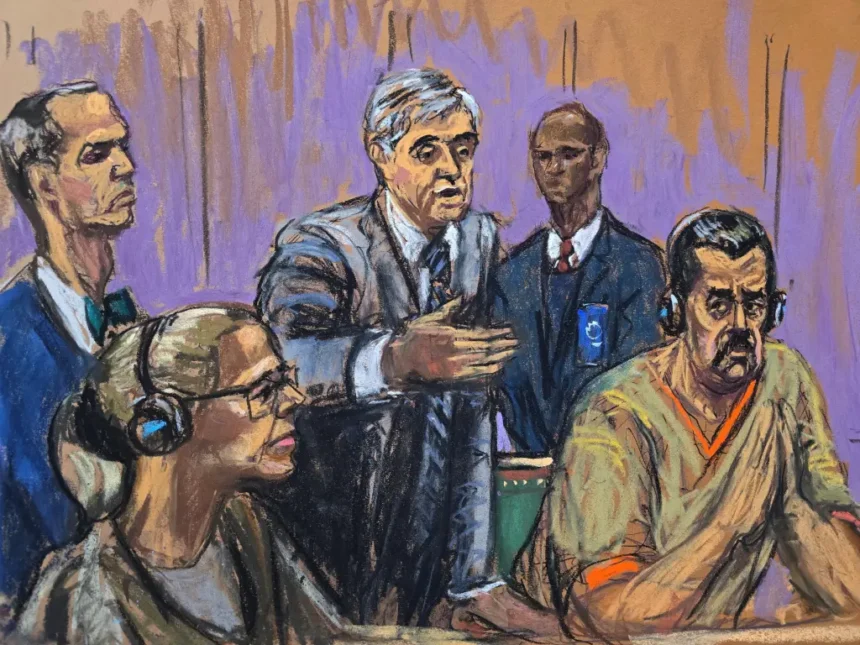
The toppled strongman, 63, wearing a tan jail jumpsuit and black glasses and seated beside his co-defendant wife, Celia Flores, 69, who was also clad in prison-issue garb, calmly jotted down notes during his first court appearance since January, where he had defiantly claimed that the US military had “kidnapped’’ him.
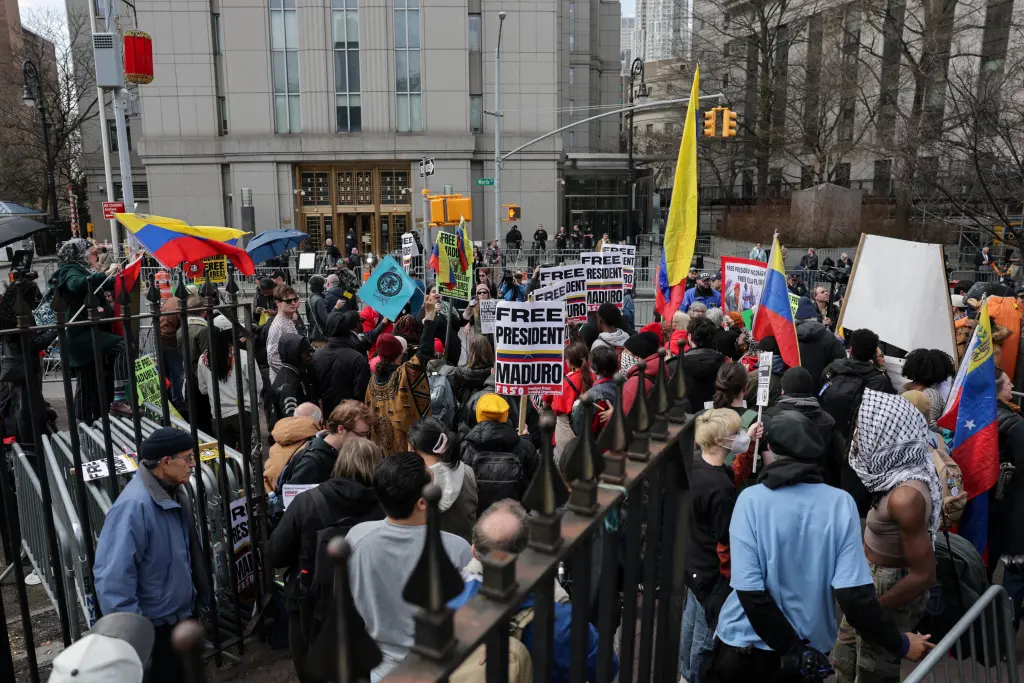
The hearing unfolded inside a packed Manhattan federal courtroom, as crowds of dueling protesters clashed outside.
Maduro’s current attorney, Barry Pollack — known for helping WikiLeaks founder Julian Assange secure a favorable plea deal that allowed him to return to his home in Australia — made a longshot bid to toss the case on the grounds Maduro’s constitutional rights to put up a defense were being interfered with.
The request prompted Judge Alvin Hellerstein to flatly reply, “I’m not going to dismiss the case.”
During the hearing, Pollack stressed that US taxpayers would have to foot the bill if the Treasury Department continues to refuse to issue a special sanctions exemption that would enable Venezuala’s government to pay for his defense.
“You have someone other than the US taxpayer standing ready and willing to fund that defense,” he told the court.
But prosecutor Kyle Wirshba argued against letting Maduro use the Venezuelan regime’s funds, saying the US government has “national security” and “foreign policy” reasons for blocking Caracas from fronting the cash.
The sanctions were issued “because the defendants are plundering the wealth of Venezuela,” and as such “it would undermine the nature of the sanctions to let them use that wealth in their defense,” Wirshba told the court.
Maduro and his wife claimed they lack the funds to cover their own defense, but Wirshba added Thursday that he does not take their word for it.
He asked the court to order some “fact-finding,” which would include forcing Maduro to submit an affidavit about the extent of his assets.
Hellerstein, a 92-year-old appointed to the bench by President Clinton in 1998, appeared sympathetic to Maduro’s bid to have his homeland pay for his attorneys.
“No matter the circumstances that brought them here, they are entitled to a presumption of innocence and have the right to defend themselves,” he said from the bench. “The current paramount goal and need is the right to defend themselves.”
Hellerstein asked aloud whether he had the right to order the US government to issue the waiver. Wirshba told him he did not.
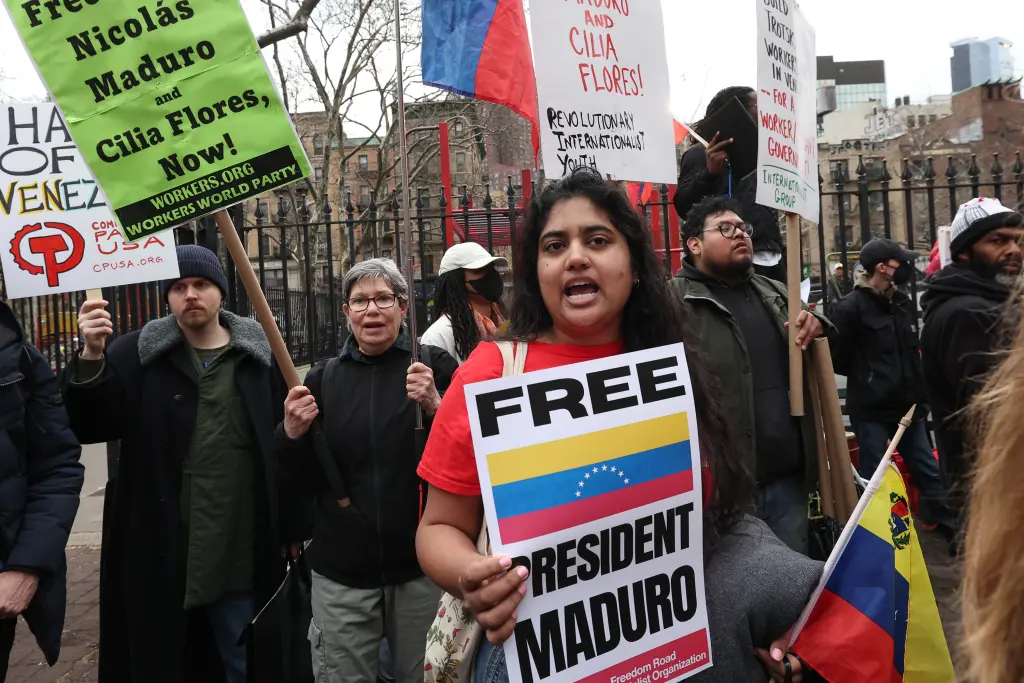
Before the hearing, several hundred prostesters both pro- and anti-Maduro gathered outside the courthouse. One member of the anti-Maduro cadre held up a sign saying “Maduro, Rot in Prison,” while the pro-Maduro crew held Venezuelan flags and signs saying “Free President Maduro.”
Others danced as they draped themselves in Venezuelan flags, displaying an effigy of Maduro in prison garb with a chain around his neck and one wrist.
Before the hearing, several hundred prostesters both pro- and anti-Maduro gathered outside the courthouse. One member of the anti-Maduro cadre held up a sign saying “Maduro, Rot in Prison,” while the pro-Maduro crew held Venezuelan flags and signs saying “Free President Maduro.”
Others danced as they draped themselves in Venezuelan flags, displaying an effigy of Maduro in prison garb with a chain around his neck and one wrist.
New York Post