
The escalating geopolitical tensions between Iran and the United States have cast a shadow over Iran’s participation in the 2026 FIFA World Cup, which the United States, Canada and Mexico will co-host. Sports
Iranian officials have indicated that participation could become impossible under the current circumstances, although FIFA has yet to confirm any withdrawal. The situation has been further complicated by remarks from U.S. President Donald Trump suggesting that it might not be appropriate for Iran to participate in the tournament for security reasons.
Should Iran eventually withdraw, it would create an unprecedented situation in the modern era of the World Cup. According to the tournament regulations, FIFA would have full discretion to determine how to fill the vacant slot, leaving a range of possibilities for replacement teams.
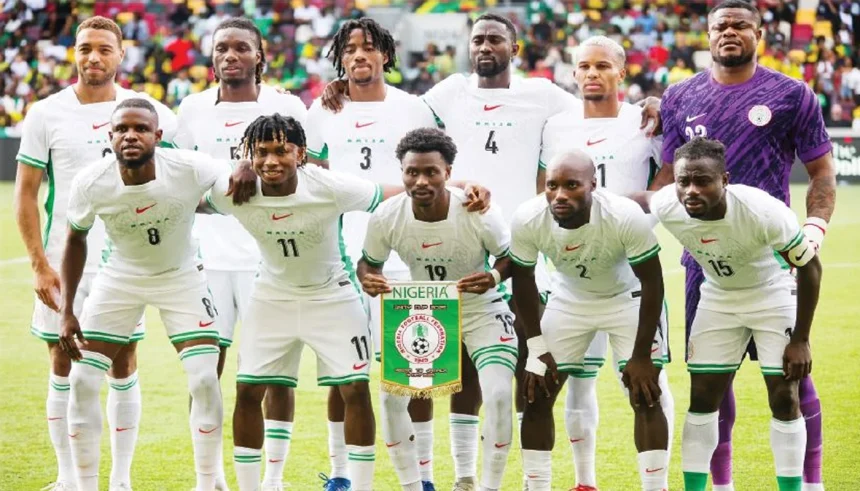
One country quietly watching developments is Nigeria, which failed to qualify through the normal route but could theoretically benefit from any extraordinary decision by FIFA.
Although there is no modern precedent for a World Cup withdrawal after qualification, a somewhat similar situation occurred at the 1980 Olympic Games in Moscow.
The United States led a boycott of the Games following the Soviet invasion of Afghanistan, prompting several nations to withdraw from the football tournament. Ghana, which had qualified, withdrew from the event. Soccer
Nigeria, despite not even making the entry list, let alone qualifying for the football competition, was subsequently offered a wildcard entry. The decision was influenced by the fact that Nigeria had not joined the boycott and was the reigning Africa Cup of Nations champion at the time.
That historical episode illustrates how extraordinary geopolitical circumstances can create unexpected opportunities in international sport.
FIFA’s discretionary power
Under Article 6 of the World Cup regulations, FIFA retains full authority to decide how to handle the withdrawal of a qualified team.
This means the governing body could invite any national team it deems appropriate, without being bound by confederation quotas or qualification pathways.
One possible option would be to invite the highest-ranked team that failed to qualify. Such an approach would maintain sporting integrity while avoiding the complicated process of reopening regional qualification tournaments. Sports
Nigeria, traditionally one of Africa’s strongest teams in the FIFA rankings, could benefit if FIFA prioritises global ranking and recent competitive strength. However, the Super Eagles could face competition from higher-ranked non-qualified teams from Europe, South America or Asia.
A group-stage complication
Another potential obstacle lies in the composition of Iran’s group. Iran have already been drawn in Group G alongside Belgium, Egypt and New Zealand.
Because Egypt has qualified from Africa, replacing Iran with another African team, such as Nigeria, would require adjustments to the group structure, since FIFA rules prevent two teams from the same confederation from being drawn into the same group — except in Europe.
Such logistical complications could influence FIFA’s decision-making.
Expanding the intercontinental playoff
Another option for FIFA would be to adjust the intercontinental playoff system, either by promoting the best team eliminated in the playoff pathway or by expanding the bracket to accommodate an additional team.
In such a scenario, Nigeria could potentially be invited into the expanded playoff field, possibly alongside teams such as DR Congo, which are already in the intercontinental qualification route.
However, this approach would likely encounter strong lobbying from the Asian Football Confederation, which would seek to retain the slot vacated by Iran within Asia. Soccer
Lessons from the 1958 World Cup
History shows that FIFA has previously exercised considerable flexibility in extraordinary situations.
During qualification for the 1958 World Cup, Africa and Asia shared a single qualifying slot. Egypt emerged as Africa’s representative but refused to play Israel, which had qualified from Asia after other teams withdrew for political reasons.
Unwilling to allow Israel into the tournament without playing a match, FIFA arranged a playoff between Israel and Wales, who had finished second in their European qualifying group.
Wales won the playoff and advanced to the World Cup — a decision that remains one of the most unusual qualification arrangements in the tournament’s history.
Nigeria’s potential case
If Iran withdraws, FIFA could once again adopt a pragmatic approach by selecting a replacement team based on competitive strength, commercial value and global appeal.
Nigeria could present a compelling case on several fronts.
The Super Eagles remain one of Africa’s most recognisable football brands, with a vast global fan base and strong commercial appeal. The country is Africa’s most populous nation, and Nigerian players feature prominently across Europe’s major leagues. Soccer
These factors — combined with FIFA’s discretionary powers — mean that while Nigeria’s chances may be uncertain, they cannot be entirely dismissed.
For now, however, the situation remains speculative. Iran have not formally withdrawn from the tournament, and FIFA has made no indication that a replacement process is under consideration.
But in international football, as history has shown, extraordinary circumstances can sometimes open doors where none previously existed.
Sports Village Square