


By Otono MOMODU
(muhaotono1@gmail.com)
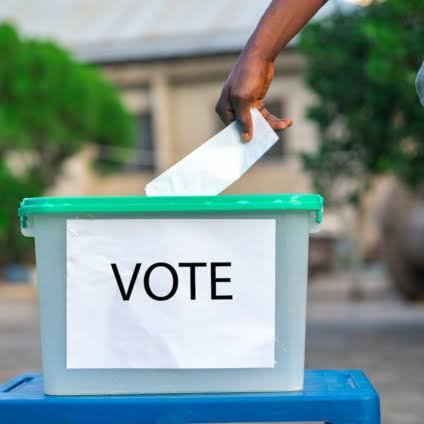
Democracy is not defined by the mere act of voting. It is defined by the quality of choices that the ballot box produces. A ballot box in itself is neutral. It can birth a statesman or a tyrant, a builder or a destroyer. The difference lies not in the box, but in the standard we, the people, maintain before, during, and after election. If we lower the standard, we will inevitably harvest leaders who reflect that low standard. If we uphold it, we will draw leaders who understand that power is a trust, not a trophy.
To maintain standard means to vote with conscience rather than with sentiment, with vision rather than with stomach. Too often in Nigeria and in many democracies around the world, elections have been reduced to transactions. Voters sell their votes for a six-yard wrapper, bag of rice (shared in cup), bag of salt, for a few thousand naira, or for ethnic and religious slogans. Political parties in turn present candidates not on the basis of competence, character, and track record, but on the basis of who can spend the most or who has the loudest godfather. When the standard for selecting leaders is money and not merit, we cannot complain when governance becomes a business venture. A people who elect clowns must not expect Shakespearean governance.
History teaches us that nations rise and fall by the standard of their electorate. The United States did not become a global power because it had elections. Many countries had elections. It became great because at critical moments its citizens demanded a higher standard: leaders who could articulate policy, who had experience, and who were accountable to law. Closer to home, Rwanda’s recovery after 1994 was not an accident. The citizens and leadership agreed, implicitly and explicitly, to maintain a standard of zero tolerance for corruption and mediocrity. The result is visible in their roads, schools, health care, and public service. Conversely, countries that treat elections as festivals of desperation continue to recycle the same cycle of poor performance, protests, and regret.
Maintaining standard through the ballot box requires three things from us as citizens. First is information. A voter who does not know the antecedents of a candidate is like a buyer who purchases goods in darkness. We must read manifestos, attend town halls, follow debates, and interrogate records. Social media and digital journalism have made this easier than ever. Ignorance is no longer an excuse; it is a choice. Second is integrity. We must refuse to sell our votes and refuse to be intimidated. The ballot is secret for a reason: so that no one can buy your conscience. Third is accountability after election. Electing a good leader is only half the work. Maintaining standard also means tracking promises, asking questions, and being ready to vote such a leader out if they betray the public trust. Democracy does not end at the ballot box. It begins there.
The role of institutions in this is also crucial. The Independent National Electoral Commission, the judiciary, the media, and civil society must all uphold the same standard. When INEC conducts free and fair elections, when the courts punish electoral offenders, when journalists fact-check candidates instead of celebrating propaganda, and when civil society educates voters, the standard rises. But institutions alone cannot save us. Aristotle said that a polity gets the government it deserves. If the people celebrate thuggery, they will be ruled by thugs. If the people celebrate ideas, they will be ruled by thinkers.
Let us therefore make a pact with ourselves and with the next generation. Let us agree that we will no longer clap for mediocrity. Let us agree that our vote is not for sale, that our tribe is Nigeria first, and that our religion is good governance. Let us ask candidates not “what can you give me today?” but “what will you build for our children tomorrow?” Let us measure leaders by their capacity, their compassion, and their commitment to the rule of law.
The ballot box is the most powerful weapon of the common man. It is quieter than a gun but stronger than an army. But like any weapon, its effectiveness depends on the skill and discipline of the one who wields it. If we maintain standard, the ballot box will give us good leaders. If we abandon standard, it will give us exactly what we deserve. The choice, and the future, is in our hands.
*Otono Momodu writes from Auchi