


By Wale OGUNBANJO
(adewaleogunbanjo@yahoo.com)

Nigeria faces one of the most complex security challenges in its history.
Across the country, citizens contend with terrorism, insurgency, banditry, kidnapping for ransom, farmer-herder conflicts, illegal mining-related violence, arms trafficking, and other forms of organized crime. These threats affect communities differently depending on location, but together they have become one of the greatest obstacles to national development, economic growth, and social stability.
I am not a security expert. My purpose is not to provide specialist military analysis but to engage the public in a discussion based on ideas, observations, and explanations that military officers, security experts, academics, policymakers, and statesmen have put before Nigerians over the years.
As someone with a procurement and supply chain background, I find it useful to view insecurity through a different lens: that of a supply chain.
A supply chain consists of planning, sourcing, production, distribution, integration, and reverse logistics. The striking thing is that many forms of insecurity appear to follow a similar pattern. Violence does not simply emerge. It is planned, resourced, organized, distributed, sustained, and replenished.
If this model or perspective is correct, then defeating insecurity requires more than eliminating armed criminals. It requires disrupting the entire chain that produces and sustains them.
Understanding the threat
Before proceeding, it is important to distinguish between some commonly used terms.
Insurgency is an organized rebellion against the authority of the state.
Terrorism involves violence against civilians for political, ideological, or religious purposes.
Banditry refers primarily to organized criminal violence carried out for financial gain, including cattle rustling, village attacks, extortion, looting, and mass abductions.
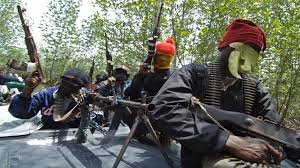
Kidnapping for ransom is the unlawful seizure of individuals in exchange for payment or other concessions.
Farmer-herder conflicts arise from disputes over land, grazing routes, water resources, and livestock between herders and farmers.
Illegal mining-related violence occurs when armed groups use force to control access to mineral resources or the proceeds from their extraction.
Although these forms of violence differ, it is not difficult to see them overlap. Terrorists engage in kidnapping. Bandits participate in illegal mining. Criminal groups share weapons suppliers and financing networks. What appears to be many problems often forms part of a single ecosystem.
Planning: Where violence begins
Every supply chain begins with planning. Similarly, insecurity usually begins with an objective.
For terrorist organizations such as Boko Haram and ISWAP, the objective is ideological. These groups reject aspects of the modern secular state and seek to impose alternative systems of governance.
For bandits and kidnappers, the objective is often economic. Violence becomes a means of generating income through ransom payments, cattle rustling, extortion, and other criminal activities.
In some cases, politics may also play a role. For decades, allegations have persisted that some politicians recruit, sponsor, arm, or otherwise patronise criminal elements for electoral or political purposes. Such claims should never be accepted without evidence. However, Nigeria’s history contains enough examples of political thuggery and election-related violence to justify serious concern.
Whether ideological, economic, or political, insecurity rarely emerges without intent. Somebody plans it before somebody executes it.
Sourcing: Acquiring weapons, money and recruits
No supply chain can function without inputs.
In the case of insecurity, the most important inputs are weapons, funding, and people.
One explanation frequently advanced by analysts is that Nigeria’s challenge with small arms and light weapons has deep historical roots. Some trace part of the problem to the aftermath of the Civil War, arguing that not all weapons circulating during the conflict were successfully recovered.
Others point to the collapse of Libya in 2011. Following the overthrow of Muammar Gaddafi, large quantities of weapons reportedly spread across the Sahel region. Former fighters and mercenaries dispersed across North and West Africa, contributing to the growth of armed groups and criminal networks.
Nigeria’s nearly 4,000 kilometres of land borders make the challenge even greater. Monitoring such vast territory is difficult, creating opportunities for the movement of weapons and fighters.
Yet weapons alone do not create insecurity. People do.
Nigeria is estimated to have more than 18 million out-of-school children, one of the highest figures in the world. A significant proportion are located in northern Nigeria. At the same time, multidimensional poverty affects millions of Nigerians, particularly in rural communities where opportunities for education, employment, and social mobility remain limited.
Many commentators therefore point to the Almajiri phenomenon as part of the broader security conversation. The overwhelming majority of Almajiri children are not criminals. They are themselves victims of social and economic circumstances. However, many analysts argue that large populations of poorly educated and economically vulnerable youths create opportunities for recruitment by insurgent groups, bandits, illegal mining operators, and criminal gangs.
Poverty does not automatically create criminals. Most poor Nigerians are law-abiding citizens. Yet criminal organizations often find recruitment easier where hope is scarce and opportunities are limited.
Production: Manufacturing violence
In business, raw materials become finished products during production.
The equivalent in insecurity occurs when recruits are transformed into operatives.
This process may involve training, radicalization, indoctrination, arming, and organization.
An unemployed youth does not automatically become a bandit. A vulnerable teenager does not automatically become an extremist. There is usually a process through which individuals are recruited, trained, motivated, and integrated into criminal or insurgent structures.
This is why education and counter-radicalization programmes are so important. They interrupt the production process before violence is manufactured.
Distribution: Moving violence across space
No supply chain is complete without distribution.
Weapons must be transported. Fighters must move between locations. Ransom payments must be transferred. Illegal minerals must reach buyers. Intelligence must flow between criminal networks.
Nigeria’s size, difficult terrain, forests, and porous borders make this stage particularly challenging.
The more effective these distribution networks become, the more difficult it becomes for security agencies to contain violence.
Integration: When criminal networks converge
Modern supply chains rely on integration. Suppliers, manufacturers, distributors, and customers interact as part of a larger system.
The same increasingly appears true of insecurity.
Bandits collaborate with arms traffickers. Terrorists engage in kidnapping. Illegal miners pay protection fees to armed groups. Smuggling networks facilitate the movement of weapons and illicit goods.
Some observers also suspect that criminal actors occasionally receive protection or support from influential individuals seeking political or economic advantage. Whether such allegations are true in particular cases is a matter for investigation rather than speculation. However, security agencies must remain vigilant because insecurity thrives when powerful actors are able to operate above the law.
The more integrated these networks become, the more resilient they become.
Reverse logistics: How insecurity sustains itself
Perhaps the most important lesson from supply chain management comes from reverse logistics.
In business, reverse logistics deals with returns, recovery, and recycling.
In insecurity, something similar occurs.
Ransom payments fund the purchase of more weapons. Illegal mining finances further recruitment. Arrested or killed operatives are replaced by new recruits. Criminal proceeds are recycled back into the system.
This helps explain why insecurity often survives even after successful military operations.
A tactical victory may remove individual actors. A strategic victory disrupts the mechanisms that continually replace them.
Recognising progress
A balanced assessment must acknowledge that Nigeria has not stood still.
The armed forces and other security agencies have recorded important successes over the years. Numerous terrorist commanders have been eliminated. Territories once controlled by insurgents have been reclaimed. Military operations have disrupted criminal networks in several parts of the country.
The acquisition of aircraft, drones, surveillance systems, and intelligence platforms has strengthened operational capabilities. Cooperation among security agencies and neighbouring countries has also improved.
These achievements deserve recognition. Yet tactical victories and strategic victories are not the same thing. Eliminating today’s terrorist is a tactical victory. Preventing tomorrow’s recruit is a strategic victory.
Disrupting the insecurity supply chain
If insecurity functions like a supply chain, then every stage of that chain must be disrupted.
Planning must be countered through intelligence gathering and the prosecution of sponsors.
Sourcing must be weakened through stronger border control, surveillance technology, and efforts to reduce the pool of vulnerable recruits through education and economic opportunity.
Production must be disrupted through counter-radicalization programmes and community engagement.
Distribution networks must be degraded through drones, satellite monitoring, and regional cooperation.
Integration among criminal networks must be broken through law enforcement and anti-corruption measures.
Reverse logistics must be disrupted by targeting criminal financing, illegal mining, ransom economies, and money laundering.
Nigeria should also continue expanding local production of military hardware and defence technology. A period of mandatory national or military service for young adults is another proposal worthy of public debate, both as a means of strengthening national cohesion and deepening citizens’ appreciation of the challenges of national defence.
Conclusion
Nigeria’s insecurity challenge is not merely a military problem. It is also an educational problem, an economic problem, a governance problem, a political problem, and ultimately a nation-building problem.
If insecurity behaves like a supply chain, then lasting success will not come from attacking only the final link—the armed criminal. It will come from systematically disrupting every stage of the chain that produces, sustains, finances, and replenishes violence.
That is the challenge before Nigeria today.*Ogunbanjo writes in from Lagos