

By Fola OJO
(X-@Folaojotweet)
Franklin Delano Roosevelt, 32nd President of the United States, who pulled his people from the Great Depression into safety and succour, must have seen a lot, heard aplenty, and experienced much. When his wise statements are made mention of in history, be all ears. Roosevelt once said that in politics, the good, the bad, and the ugly happen. And whatever happens in politics, it is never outside of the collusion and coordination stratagems of politicians.
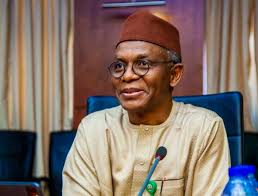
Malam Nasir El Rufai is a Northern politician of gravitas. He served two terms as governor, and his tenure was marked by both praise for modernisation efforts and criticism over security challenges. For four years under President Olusegun Obasanjo, he led major restructuring and urban planning reforms in Abuja as Minister of the Federal Capital Territory. El Rufai has his footprints all over the landscape of most of the major political parties in Nigeria from Peoples Democratic Party; Congress for Progressive Change; All Progressives Congress; Social Democratic Party, and lately, the African Democratic Congress, which he joined last year after a protracted fiery furore with the party he helped at the 2023 poll, and the President he lent a hand installing.
I took an interest in the activities of the former governor of Kaduna State for the first time in 2016, when he got entangled in a brawl with fiery Apostle John Suleiman from Edo State. The apostle pronounced a death curse on the governor, declaring that El-Rufai would die in 14 days following a proposed bill set toward stifling preachers of the gospel through government licensure. Under El-Rufai as governor, pastors and Christian workers were butchered boundlessly in cold blood in the name of religion. It remains on record that the first-hand savage slaughtering of human beings by extremist religious sects liberally took place under the former governor, and there was rarely any attempt at bringing to justice the offending criminals. At the end of the drama between the apostle and the governor, El-Rufai did not die, and his proposed bill did not live.
El-Rufai seems to be the most visible hatchet man for the morphing political coalition desirous of derailing President Bola Tinubu from achieving his dream and calculation of reelection in 2027. His coalesced partners are already jumping on the privately and publicly expressed anger of Nigerians and the “ebi npa wa” (we are hungry) miserere of many citizens. The former governor, former minister, and former member of the ruling party APC is not holding back on his spleen and wrath against the administration of Tinubu, branding it “evil” in some media interviews.
He was once Tinubu’s pal as he galvanised votes and canvassed voters for this President in the 2023 election. He, without a doubt, moved mountains in the hearts of many Northern governors to ensure not just that Tinubu won the party primaries, but also the presidential election against Abubakar Atiku and Peter Obi. Today, he has become a determinedly desperate archenemy of the President and the ruling party. Nasir now wants us to believe that the majority of Nigerians have turned their backs on the Jagaban of Borgu. It is said in many quarters that El-Rufai wants to position himself as El-Shadai, the all-sufficient God of heaven who alone crowns a king and dethrones the same on a whim.
As I write, El-Rufai is cooling his heels in the detention camp of the Nigerian law enforcement. I’m certain that he is rattled right now. Until lately, did he ever believe that he would become a hounded target of security operatives at a Nigerian airport? Did he ever conceive the idea that a man of his status would be isolated in a gallow run by the same government he helped birth? My friends, El-Rufai is not El-Shadai! No man is.
The former governor went on national TV a few weeks ago in a reckless rodomontade that he intercepted communications involving Nigeria’s national Security Adviser, Nuhu Ribadu. This admission triggered national outcry and calls for investigation, as unauthorised interception is a serious offence under Nigerian law. Many of his friends and adversaries have described his allegations and outbursts as lies and fabrications. This is what his former boss, Baba Obasanjo, reportedly said recently in a public event: “Nasir’s penchant for reputation savaging is almost pathological. Why does he do it? Very early in my interaction with him, I appreciated his talent. At the same time, I recognised his weaknesses; the worst being his inability to be loyal to anybody or any issue consistently for long.” Nasir’s troubles are plenteous. He is under investigation by the EFCC and ICPC over alleged misappropriation of public funds during his tenure as governor. A Kaduna State House of Assembly report accused his administration of mismanaging loans, violating due process, and contributing to a N432bn financial scandal. He has been held at different times by the EFCC, ICPC, and DSS as part of overlapping investigations into corruption and national‑security-related allegations.
El-Rufai is widely branded as a peevish, petulant, and polarising petrel. His romance with controversies isn’t cloistered as he continues to fight with all his claws to defend himself against what he calls political persecution. He recently showed up in court, saying the DSS has no legal backing to elevate a “casual remark” he made during a television interview to “a confession” that he had indeed tapped the NSA’s telephone line as alleged. He argued that the statement he made on TV did not constitute a confessional statement in law. Whatever is going on behind the scenes between these politicians, the road for El-Rufai ahead of the 2027 election will be full of thorns and thistles.
A man called Henry John Temple (Lord Palmerston) was the 3rd Viscount, the fourth rank in the British peerage system, and the United Kingdom prime minister twice over a hundred years ago. His historical speech was delivered on the floor of the House of Commons on March 1, 1848. “We have no eternal allies. And we have no perpetual enemies. Our interests are eternal and perpetual. And those interests it is our duty to follow.” This was an admonishment to Palmerston’s fellow countrymen about the benefits of relationships and diplomatic bonding with other nations. From that speech came a phrase now famously touted in the murky battlefield of global politics: “No permanent friends or permanent enemies, only permanent interests.” Lord Palmerston seemed to agree with the notion that, as we deal with politicians, we should note that there are interests they serve and protect. And this must be expected because the pursuit of self-interest comes with the terrain in politics.
If El-Rufai’s many travails are true political persecution, well, it comes with the territory. Many voices have also risen, accusing the former governor of worse political vindictiveness that may have allegedly led to people’s demise and disappearance. Someone should whisper it in the ears of the former governor that position or power does not make any man God. They come and go like vapour. Will the current travails humble Nasir El-Rufai a tiny bit? Not certain. But what is cocksure is that no man is God. Not even men of God. And not El-Rufai.