


For generations, the ancient town of Oba-Ile in Akure North Local Government area of Ondo State has preserved a rich heritage shaped by history, traditional institutions, ancestral wisdom and a deep reverence for the customs handed down by its forebears.
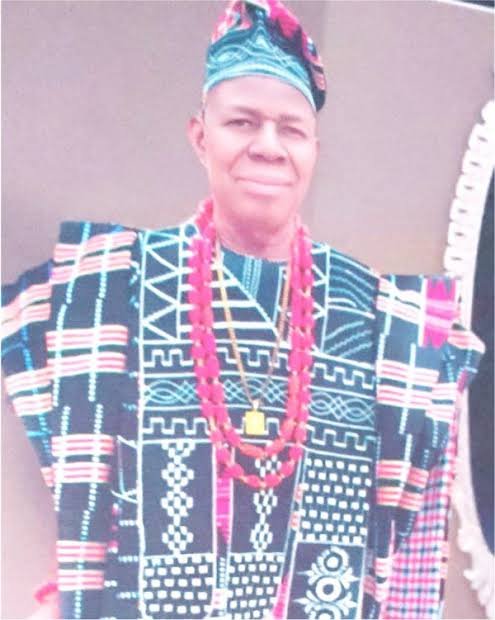
One of the custodians of these traditions is High Chief Bara Omootayo Oluwaniyi Moses Opameyon IV, who spoke about some of the beliefs, taboos and traditional practices that have continued to define the identity of Oba-Ile.
According to him, the story of Oba-Ile cannot be separated from the history of the Yoruba people and the ancient traditions surrounding Ile-Ife.
Historical accounts describe Oba-Ile as one of the ancient Yoruba settlements, with traditions linking the town to the early history of Ile-Ife. Some accounts place its settlement before the emergence of present-day Akure, while oral traditions identify the Oloba as an ancient priest-king whose history is intertwined with the early spread of Yoruba settlements.
Tradition holds that an early Oloba, known as Akaiyedo, settled at a place called Alegunranyin before the community later moved to its present location. Oral history also links the people of Oba-Ile to the establishment of other settlements and to the historical development of Akure.
The connection between Oba-Ile and Akure is particularly significant.
Historical and cultural accounts state that Obagbeyi, a prince of Oba-Ile, was sent to become the Deji of Akure, and that some festivals and cultural practices observed in Akure have their origins in Oba-Ile. The italicise festival, for instance, is said to have originated from Oba-Ile before being introduced to Akure.
For the people of Oba-Ile, however, history is not confined to stories of migration and ancient kings. It is also reflected in the customs that continue to regulate community life.
The Yikiyiki chicken pox epidemic was one of the most enduring stories in Oba-Ile concerns a deadly disease remembered in oral tradition as “Yikiyiki,” which High Chief Opameyon described as a form of smallpox that once threatened the survival of children in the community.
He recalled that many years ago, the disease became so devastating that children, particularly those between birth and three years of age, were dying in large numbers.
“The people became worried because the number of children in the community was gradually reducing. It was as if the disease was wiping out an entire generation,” he said.
With the situation becoming increasingly alarming, the people reportedly approached the palace, where the traditional ruler consulted Ifa, according to the belief system of the people at the time.
The consultation, produced specific instructions which became part of the town’s traditional laws.
“The instruction was that nobody should roast yam, corn or plantain within Oba-Ile. It was believed that stopping the roasting of these foods would bring an end to the strange disease,” he said.
According to the High Chief, the prohibition has remained in force despite the disappearance of the disease.
He explained that roasted yam, corn or plantain purchased outside Oba-Ile could be brought into the town and eaten, but such food must not be roasted within the community.
“Since then, nobody is allowed to roast yam, corn or plantain for consumption inside Oba-Ile. It is a tradition that has been handed down from our forefathers,” he said.
He, however, noted that there could be circumstances involving traditional sacrifices, particularly those connected with Ogun, where specific instructions may require the roasting of food. Such practices, he stressed, are strictly ritual matters and are not intended for commercial purposes.
High Chief Opameyon stated the customs that protect the community which is the restrictions are part of a broader system of traditional regulations designed to preserve the spiritual and cultural identity of Oba-Ile.
He explained that certain practices regarded as symbols of misfortune or death are also prohibited.
One of these is bringing a bunch of bananas into the community.
“In Oba-Ile, we believe that a bunch of bananas represents the death of a young man and the death of the younger generation,” he said.
According to him, the prohibition is rooted in the community’s desire for its young people to prosper and live long lives.
Farmers, he explained, are expected to cut the bananas into pieces before bringing them from the farm into the town.
Another taboo, he said, concerns burnt wood, which is traditionally regarded as a symbol associated with death.
“These are not things that we just created today. They are customs that have existed from time immemorial,” he said.
The High Chief also spoke about other traditional practices that are not observed in Oba-Ile which is the Place of Ayelala and Egungun.
According to him, the community does not worship Ayelala, explaining that the traditional belief of the people is that Ayelala and Oba-Ile are not compatible.
Similarly, Egungun (masquerade) is not permitted within the town.
He said these restrictions form part of the spiritual identity of the community and are observed because of instructions handed down by the ancestors.
Another traditional practice concerns women going to the market. According to him, women are expected to cover their heads as part of the community’s cultural norms.
The festivals and wisdom of the ancestors for Oba-Ile, festivals are also an opportunity to renew the community’s connection with its history.
High Chief Opameyon said the people pay close attention to instructions associated with Ifa during their traditional festivals and ensure that established customs are respected.
He emphasised, however, that the community does not use children for sacrifices.
“We do not use our children for sacrifice. We do not use children to appease any deity,” he said.
“Our forefathers have already done everything necessary for us.”
Preserving an ancient identity
The traditions of Oba Ile provide an insight into how an ancient Yoruba community has preserved its identity despite the rapid changes brought by modernisation.
While some of the practices may be viewed through the lens of history, culture or traditional spirituality, they remain important to the people as symbols of their collective memory.
The story told by High Chief Opameyon is therefore more than a narration of taboos. It is a story about a people determined to preserve the wisdom of their ancestors and pass it from one generation to another.
Oba-Ile’s historical significance is further underscored by accounts that describe it as predating Akure and by traditions connecting its royal institution with the early development of neighbouring communities. A 1977 Morgan Commission testimony attributed to the then Deji of Akure also recognised the Oloba as a beaded-crown ruler with authority over his own land.
Today, as Oba-ille continues to grow and interact with the modern world, its traditional institutions remain a reminder of a past in which the survival, spiritual life and social order of the community were closely tied to the authority of the palace, the wisdom of elders and the instructions of the ancestors.
For High Chief Opameyon and other custodians of the culture, preserving those traditions is not simply about looking into the past. It is about ensuring that future generations understand where they came from and why the customs of Oba Ile still matter.
Some residents of Oba-Ile in Akure, have admitted they were unaware of the community’s long-standing tradition prohibiting the roasting and sale of yam, corn and plantain until recently.
A resident, Mr. Lekan Akinfolarin, who has lived in Oba-Ile with his family for seven years, said the only cultural practice he knew about was the Amole tradition, during which shops remain closed across the town.
“I knew about the Amole culture where no shops are opened in Oba-Ile. I also know the community recently celebrated a cultural festival on September 1. But I had never heard about the roasted yam tradition,” he said.
Akinfolarin described Oba-Ile as a peaceful and rapidly growing metropolis, noting that many people often mistake it for Akure because of its closeness to the state capital.
He said he had observed that roasted yam was not sold anywhere in the town, but never bothered to ask why.
“Whenever I want roasted food, I usually go to Akure to buy it. I never asked why roasted yam, corn, or plantain is not sold in Oba-Ile.”
Another resident, Mrs. Adenike Olaitan, also expressed surprise at learning about the tradition, saying she had never seen anyone roasting yam, corn or plantain in the community.
“I have never seen anybody roast anything in Oba-Ile, and I never asked the reason why,” she said.
Olaitan added that although she is an indigene of Oba-Ile, she had neither heard nor been told about the tradition by her parents.
According to her, it was only after the reporter visited her home that she and her sister sought clarification from an elderly member of the family, popularly called Baba, who explained the history behind the age-old cultural practice.
The Hope