

…incumbent governor, ex-commissioner, former speaker square off in poll
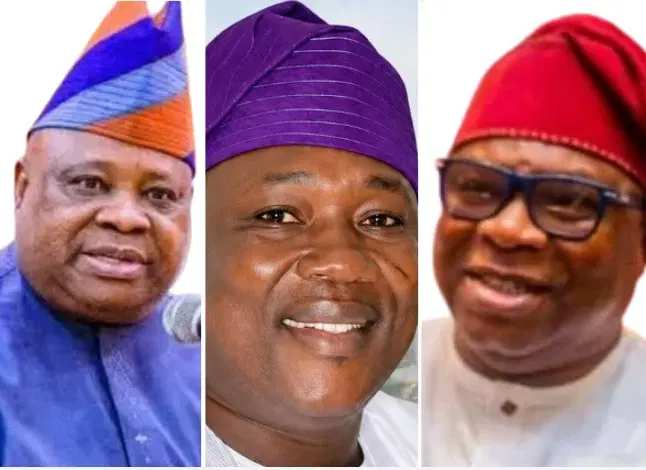
It’s some hours to the governorship election in Osun state, and the contest is more or less a three-horse race, with incumbent governor Ademola Adeleke facing stiff competition from Bola Oyebamiji of the All Progressives Congress (APC) and Najeem Salaam of the African Democratic Congress (ADC).
Adeleke, a former senator who represented Osun west, is seeking re-election for a second term, while Oyebamiji, popularly known as Ambo, and Salaam are vying to become governors of the ‘State of the Living Spring’ for the first time.
However, beyond the contest’s three-way nature, the political weight behind each candidate and the state’s electoral history suggest Adeleke faces a tougher battle than in a conventional incumbency race.
Adeleke’s incumbency factor
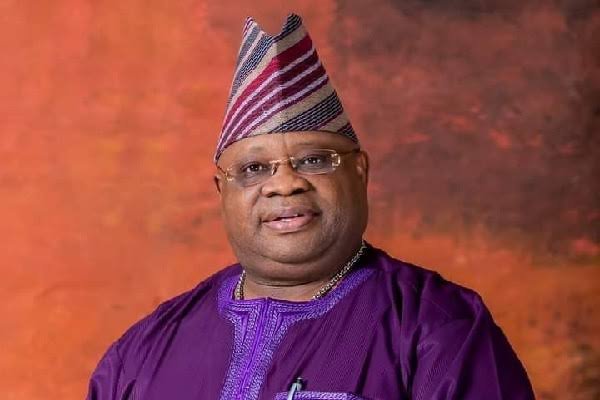
Adeleke, Osun governor, is seeking re-election under the Accord party.
Adeleke hails from a prominent family in Ede north LGA, one of the council areas that recorded some of the highest votes in the last election.
He first contested the governorship election in 2018 on the Peoples Democratic Party (PDP) platform, going head-to-head with Adegboyega Oyetola, the then-candidate of the All Progressives Congress (APC).
However, he lost narrowly, polling 255,023 votes against Oyetola’s 255,505 in the keenly contested election.
Adeleke, who has earned the moniker “dancing governor” because of his penchant for dance, returned to the polls four years later and defeated his arch-rival, Oyetola, in 2022, polling 403,371 votes across 17 local government areas of the state, while Oyetola, the incumbent at the time, won in the other 13 LGAs.
Adeleke subsequently left the PDP for Accord amid the party’s protracted internal wrangling.
He said the decision, taken after weeks of consultations with PDP leaders across the state, was to complete the “ongoing delivery of good governance and democratic dividends” to Osun’s teeming population.
Bamidele Salam, lawmaker representing Ede north/Ede south, Egbedore/Ejigbo federal constituency of Osun, and chairman of the publicity committee of the Adeleke campaign council, said that the PDP structure in the state moved with the governor to Accord.
“So, if you know the PDP’s strength in Osun state a couple of months ago, you can gauge how strong the Accord is in Osun because we moved the whole PDP structure into the Accord when the PDP’s crisis was becoming intractable,” he said.
For many political observers, the governor is banking on the incumbency factor and his popularity, which have worked well for him over the past two election cycles in the state.
Aside from wielding control of the government machinery, the governor also reportedly enjoys the support and backing of civil servants, labour groups, and artisans, largely due to his perceived accessibility and welfare-oriented policies.
His administration is also said to have recorded notable achievements in key areas, including road infrastructure, increased internally generated revenue (IGR), prompt payment of salaries and pensions, and health insurance coverage for pensioners.
Oyebamiji and APC federal influence
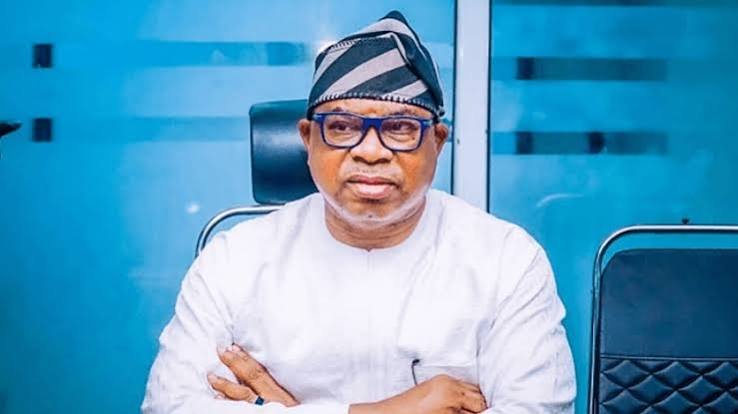
Backed by federal power under the ruling APC, Oyebamiji is giving Adeleke a run for his money
While Adeleke commands the state government’s political machinery, Oyebamiji, his fiercest challenger, wields federal influence.
Oyebamiji’s journey in the Osun guber race began in November 2025 when he resigned as managing director of the National Inland Waterways Authority (NIWA) to pursue his governorship ambition.
He emerged as the APC’s consensus governorship candidate a few weeks later after seven other aspirants unanimously stepped down for him following consultations and high-level engagements involving party leaders at both the state and national levels, including President Bola Tinubu.
The APC’s screening committee had also disqualified some other aspirants, including Iyiola Omisore, the party’s former senator and national secretary, from the race, helping to smooth the consensus process.
Oyebamiji’s elite backing in the state was said to have been championed by Adegboyega Oyetola, who reportedly nominated him to Tinubu and the party’s hierarchy for the Osun governorship ticket.
Oyebamiji served as commissioner for finance in Osun state for five years under Oyetola and Rauf Aregbesola, the state’s two former APC governors.
But beyond the backing that helped him secure the ticket, Oyebamiji appears to have gained further political momentum from the presidency as the election draws closer.
In what could be seen as a strong affirmation of Oyebamiji’s presidential backing, Tinubu reportedly summoned about 76 APC leaders across the state to a meeting in Abuja last week, where he directed them to close ranks and ensure that Oyebamiji emerged victorious at the polls.
Tinubu was said to have brokered the move amid growing disquiet within the Osun APC, following an intelligence report by Nuhu Ribadu, the national security adviser, which reportedly warned about the party’s chances ahead of the election.
Following the president’s directive, several APC leaders in Osun, including Omisore and Patricia Etteh, former speaker of the house of representatives, as well as Mojeed Alabi, Adejare Bello and Wale Afolabi, former speakers of the state assembly, who had been sidelined in the party’s governorship campaign, were said to have thrown their weight behind Oyebamiji.
Days after the meeting, Olagunsoye Oyinlola, former Osun governor, and Omisore declared their support for Oyebamiji.
Oyinlola, a chieftain of the Peoples Democratic Party (PDP), also announced his support for Oyebamiji alongside other leaders of his PDP faction, including Fatai Akinbade, former secretary to the state government (SSG), and Tajudeen Oladipo, former national vice-chairman (south-west) of the PDP.
Political observers said Tinubu’s intervention could help address the divisions that worked against the party during Oyetola’s failed re-election bid in 2022.
Beyond his political clout, the APC flagbearer, who hails from Ikire in Irewole LGA, is widely regarded as a technocrat, having spent years in the banking industry and being a fellow of the Chartered Institute of Bankers of Nigeria (CIBN).
He was said to have overseen significant growth in IGR and a reduction in financial leakages during his tenure as commissioner in Osun.
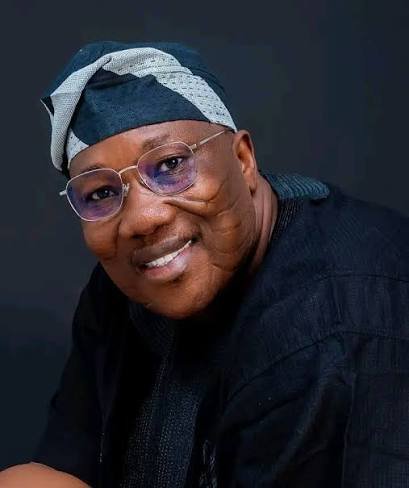
ADC’S Salaam, the political scientist
Though not as prominent as the two leading candidates, Salaam is a force to be reckoned with in Osun politics
Unlike Adeleke and Oyebamiji, Salaam comes to the governorship race against the backdrop of a strong academic pedigree in political science, having obtained his first degree, master’s and PhD in the discipline from Obafemi Awolowo University (OAU), Ile-Ife.
While academic credentials alone may not determine the ability to govern a state, the ADC flagbearer also brings considerable legislative experience to the race.
Salaam, who represents the Ejigbo constituency, is regarded as the longest-serving member of the state assembly to date.
He served as speaker of the Osun state in the fifth and sixth assemblies during Aregbesola’s reign between 2011 and 2018.
Salaam emerged as the ADC flagbearer in December 2025 when he contested the party’s primary as the sole governorship aspirant, receiving 520 votes from the 528 delegates who participated in the exercise across the state.
Since his emergence, the ADC candidate has enjoyed the backing of Aregbesola and members of the Omoluabi Progressives, who pulled out of the APC in 2023 following their suspension by the state chapter of the party and Aregbesola’s strained relationship with some party leaders at the national level.
According to political pundits, Salaam’s campaign has been issue-based, focusing on workers’ welfare, jobs, agriculture, power, education, security and accountable governance.
His candidature is seen in some quarters as a continuation of Aregbesola’s progressive political agenda, with a promise to address perceived governance gaps and promote inclusive growth.
On Monday, Atiku Abubakar, ADC presidential candidate, canvassed support for Salaam, saying the party is different from other political parties.
“The best of Nigerians are in the ADC today,” Atiku told the people of Osun during the grand finale of the ADC governorship campaign rally in Osogbo, the state capital.
Eleven other contenders
Aside from the three major contenders, 11 other candidates are contesting in the election.
They include Farinloye Olarenwaju of the Action Alliance (AA); Esan Olajide of the African Action Congress (AAC); Adeagbo Opawoye of the African Democratic Party (ADP); Adesina Adeyemi-Doro of the All Progressives Grand Alliance (APGA); and Saliu Oyelami of the People’s Redemption Party (PRP).
Others are Ogunsakin Olalekan of the Young Progressives Party (YPP); Adefemi Adesuyi of the Zenith Labour Party (ZLP); Adewale Adebayo of the Allied People’s Movement (APM); Clement Adesuyi of the Action Peoples Party (APP); Masilo Adeleke of the Boot Party (BP); and Taofeek Adeleke of the New Nigeria People’s Party (NNPP).
Olajide is a 39-year-old geographer and entrepreneur who hails from Ejigbo, the same LGA as the ADC candidate. Adeagbo, the only female candidate, is an 84-year-old retired school principal and activist.
Adeyemi-Doro, the APGA candidate, recently withdrew from the race and endorsed Oyebamiji. He hails from Otan-Ayegbaju in Boluwaduro LGA.
The permutation
While Adeleke, Oyebamiji and Salaam all hail from Osun west, Osun central is the largest voting bloc, accounting for about 42.1 percent of all registered voters, according to data from the Independent National Electoral Commission (INEC).
Records from the electoral commission show Osun has a total of 2,339,233 registered voters across the 332 wards and 3,763 polling units for the governorship election.
Of this number, Osogbo LGA leads with 167,704 registered voters, with Ife east and Olorunda coming second and third with 128,515 and 123,063, respectively.
Interestingly, Adeleke’s LGA, Ede north, and Oyebamiji’s Irewole follow each other closely on the chart, coming sixth and seventh, respectively, with 96,644 and 96,538 registered voters. This indicates that the two LGAs are nearly equal in voting strength.
Given this, both candidates are expected to be banking on other LGAs for the mega votes needed to ease their path to victory.
With the three major 2026 candidates all from Osun west, the district is expected to be fiercely contested internally, which could dilute its overall impact and make performance in the other two districts even more decisive.
Adeleke, in particular, will be hoping to repeat the 2022 masterstroke, when he recorded a strong showing in parts of Osun central and east, polling 138,733 and 120,080 votes, respectively, to defeat Oyetola, who could only muster 136,294 votes in Osun central and 121,873 in the east.
Going by the 2022 precedent, Osun central will undoubtedly be a major determinant of who emerges victorious in the election.
The big question
With political tension gripping the state and escalating in recent weeks amid counter-accusations and multiple arrests, observers say the election will not be an easy ride for any of the three major contenders.
The last election in the state recorded a 42.27 percent voter turnout, a slight drop from the 46.20 percent recorded in the 2018 election and the 54.17 percent recorded in the preceding poll.
However, there are indications that the turnout could fall further on Saturday, given the spate of recent politically motivated killings and the heavy deployment of security personnel for the poll, with the police alone deploying 15,000 operatives.
The bigger question is how the major contenders will translate their individual strengths, cross-party connections and external influence into votes, and what that will mean for the overall vote count.