

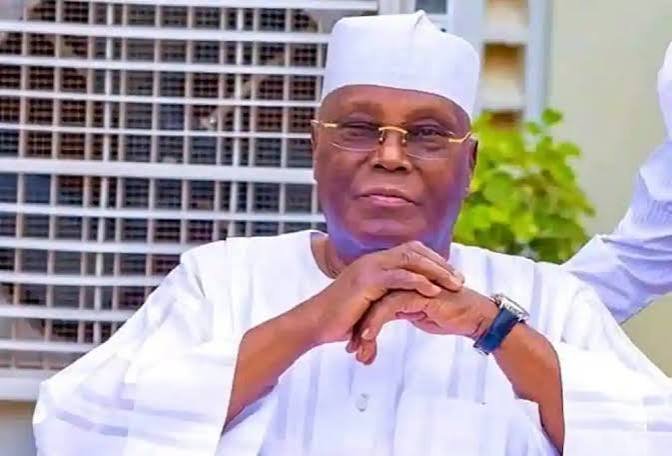

Former Vice-President Atiku Abubakar says he has no regrets about standing against ex-President Olusegun Obasanjo’s third-term agenda while they were in office.
Obasanjo served two terms as Nigeria’s president alongside Atiku as his vice-president from 1999 to 2007.
Speaking on Friday during a fireside chat with Charles Oputa, the activist popularly known as Charly Boy, in Lagos, Obasanjo said he regretted picking Atiku as his vice-president.
The former president said he later learnt certain things about Atiku that made him regret the decision, adding that he thanked God that the former vice-president was never allowed to harm Nigeria under his watch.
“The man I picked as my running mate, my number two, if I had known as I came to know him later, I would not have picked him,” he said.
“I mean my vice-president. What I know about him later makes me… thank God because God did not allow his actions and reactions to overwhelm me or to divert my focus from Nigeria or to harm Nigeria.”
‘I’m proud I stood against the agenda’
Reacting to Obasanjo’s comments in a statement issued on Saturday by Phrank Shaibu, his senior special assistant on public communication, Atiku said he watched the former president’s interview with profound sadness, not anger, “because it reflected the disposition of a man who has allowed personal resentment to cloud historical truth”.
Atiku said the roots of Obasanjo’s hostility towards him are well known to Nigerians.
“I am proud that I stood against the third-term agenda. I am proud that I stood by the Constitution of the Federal Republic of Nigeria,” he said.
“I have no apology whatsoever for frustrating every attempt to subvert our democracy for personal ambition.”
He argued that no individual is bigger than Nigeria, adding that if Obasanjo’s bitterness towards him truly stemmed from his opposition to the “unconstitutional third-term” bid, he would wear the resentment as a badge of honour.
The controversy over Obasanjo’s alleged third-term agenda emerged during the 2005–2006 constitutional amendment process, when lawmakers considered wide-ranging changes to the 1999 Constitution, including a proposal that would have allowed presidents and governors to serve three four-year terms instead of the existing two-term limit.
However, the bid collapsed on May 16, 2006, after the senate rejected the constitutional amendment bill.
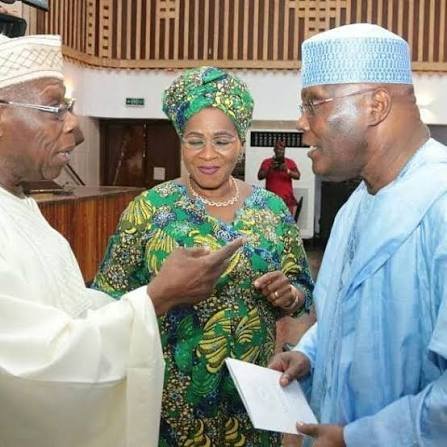
Atiku was widely reported to have played a leading role in opposing the proposal, publicly campaigning against tenure elongation and working with lawmakers and other political stakeholders to rally resistance.
He said the struggle against the third-term agenda was never about two individuals but about preserving Nigeria’s constitutional democracy for future generations.
“The Nigerian people won that battle. Democracy won that battle. History has already delivered its verdict,” he said.
Atiku also referenced a recent remark credited to Ngozi Okonjo-Iweala, former minister of finance during Obasanjo’s administration, in which the renowned economist paid glowing tribute to the economic management team he led as vice-president.
“Chief Obasanjo may choose not to appreciate my role in building one of Nigeria’s most prosperous economic eras, but history has been far kinder,” he said.
“The record speaks for itself, and so do the testimonies of those who worked closely with that administration.”
‘I mobilised structures for his freedom’
He added that Nigerians also deserve to remember the other side of history, which, according to him, Obasanjo conveniently omitted.
“History records that while Chief Obasanjo was in prison, I stood firmly by him,” the former vice-president recalled.
“I supported his family, worked tirelessly with other patriots for his release and never wavered in my belief that he deserved his freedom.
“When he eventually regained his freedom, he had little to his name. I received him, clothed him, ensured he was properly cared for and extended every support necessary to help him regain his footing.”
Atiku said he “mobilised political structures, built alliances and made enormous personal and political sacrifices that culminated” in Obasanjo’s emergence as president after leaving prison.
“Do I regret helping Chief Obasanjo? Absolutely not. When God gives you the opportunity to lift another human being, you do so without expecting repayment. Acts of kindness are matters of conscience, not commercial transactions,” he said.
“If the true history of Chief Obasanjo’s political journey is ever written—free from selective recollection and personal bitterness—Atiku Abubakar will feature prominently as one of those whom God used to change the course of his life and political career,” Atiku said.
He expressed disappointment that, at a time when Nigeria is battling economic hardship, mass unemployment, insecurity and widespread despair, a former president would devote so much energy to recycling old grudges instead of contributing solutions to the country’s challenges.
“The 2027 election should be about rebuilding Nigeria, restoring security, reviving the economy and giving hope to the next generation—not reopening old political wounds,” he added.
He said although Obasanjo is entitled to his opinions and personal grievances, “he is not entitled to his own facts”.
Background
Since leaving office, both men have repeatedly traded accusations over corruption, abuse of office and political betrayal.
The verbal exchanges intensified recently after Obasanjo alleged that Atiku gave the late Ghali Umar Na’Abba, former speaker of the house of representatives, N5 million to begin impeachment proceedings against him during his first term in office.
Reacting, Atiku accused the ex-president of fabricating allegations against him to favour his kinsman ahead of the 2027 elections.