

- Understanding Nigeria’s power challenge
By Wale OGUNBANJO
(email: adewaleogunbanjo@yahoo.com)
“Up NEPA!” Few expressions capture the Nigerian experience better than these two words. They are shouted whenever electricity returns after an outage. Although the National Electric Power Authority (NEPA) ceased to exist years ago, its name remains firmly rooted in our vocabulary.
But have we ever stopped to ask a simpler question: How does electricity actually get to our homes?
Understanding that journey can help us better appreciate the challenges to reliable electricity supply in Nigeria. It can also help us understand why debates about tariffs, privatisation and sector reforms are often more complex than they first appear.
The purpose of this opinion article is to contribute to public education, particularly for Nigerians who are not specialists in the electricity sector. In the interest of simplicity, the terms power and electricity are used interchangeably.
Understanding key terms
Before we go further, it helps to know what certain words mean, because they come up repeatedly in any serious discussion about electricity in Nigeria.
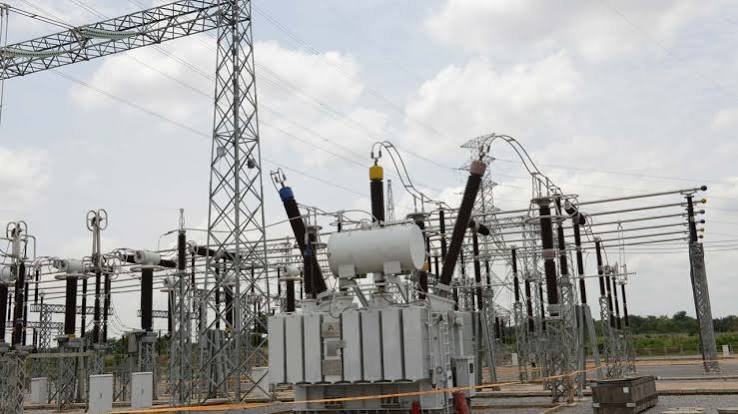
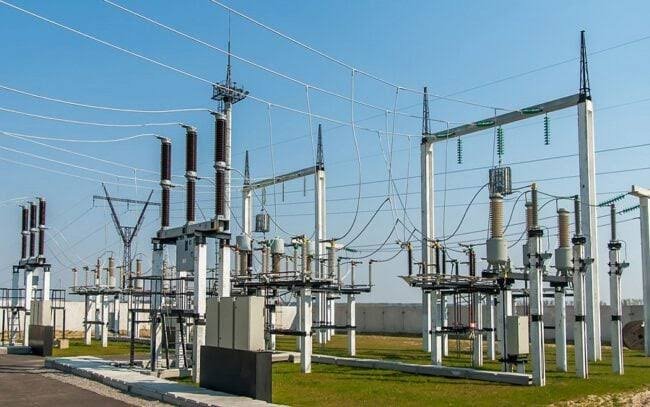
The national grid: the interconnected network of power lines, substations and equipment that links every power-generating plant to every electricity consumer across the country — much like the national road network links every town and village.
Megawatt (MW): a unit of power. Just like the kilometre is used to measure distance travelled on a road, the megawatt is used to measure the quantity of electricity delivered to consumers. Kilowatt (KW) is a smaller unit of it.
Installed capacity: the maximum power a plant is designed to produce under ideal conditions — not the same as what is actually generated day to day. Nigeria has an installed capacity of approximately 14,000 MW but actual average delivery of only about 4,100–5,000 MW.
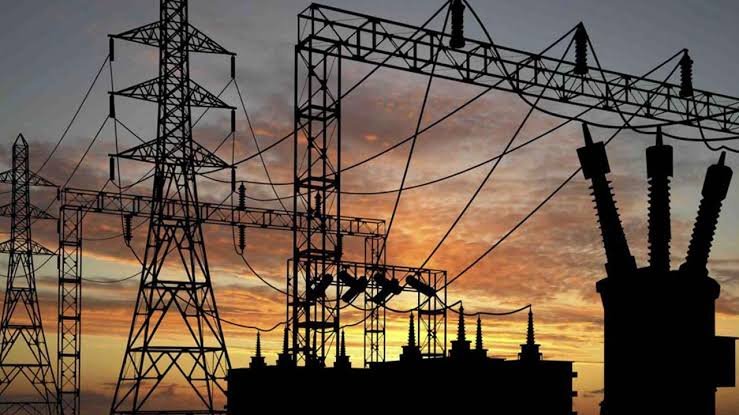
Grid collapse: a sudden, widespread blackout affecting multiple states simultaneously, sometimes triggered by a single fault when supply and demand go out of balance on the grid.
ATC&C losses: Aggregate Technical, Commercial and Collection losses — a measure of how much electricity a distribution company receives but fails to convert into paid revenue. Technical losses occur in ageing cables and equipment. Commercial losses come from unmetered customers, estimated bills and energy theft. Collection losses arise when customers are billed but do not pay.
Cost-reflective tariff: an electricity price that genuinely covers the full cost of generating, transmitting and distributing power — as opposed to an artificially low, subsidised price that leaves companies unable to recover their costs.
Mini grids: small, self-contained power networks serving a community or cluster of buildings, operating independently of the national grid.
Embedded generation: electricity produced close to where it is consumed — for example, a solar installation on a factory rooftop — rather than generated centrally and transmitted over long distances.
The journey of electricity: From source to switch
Electricity begins its journey at a Generation Company (Genco) — power plants burning natural gas, or hydropower dams like Kainji, Shiroro, and Jebba. The electricity enters the National Grid operated by the Transmission Company of Nigeria (TCN), which transports it across the country before handing it to Distribution Companies (DisCos) for delivery to homes and businesses.
The physical flow is: Gas Supplier → GenCo → TCN (National Grid) → DisCo → Consumer.
Money flows in the opposite direction: Consumer → DisCo → NBET → GenCo → Gas Supplier.
Between the Gencos and Discos sits the Nigerian Bulk Electricity Trading company (NBET), the sector’s middleman, buying power wholesale from Gencos and selling it to Discos. Overseeing the whole system is the Nigerian Electricity Regulatory Commission (NERC), which sets the rules, fixes tariffs and issues operating licences.
A brief history: From one company to many
Nigeria’s public electricity system began in Lagos in 1896. The Electricity Corporation of Nigeria (ECN) and the Niger Dams Authority (NDA) were merged in 1972 to form the National Electric Power Authority (NEPA), a vertically integrated (all activities in one company) utility responsible for generation, transmission and distribution.
By the early 2000s, reform had become unavoidable. Infrastructure was ageing, capacity had not kept pace with population growth, and the financial burden on government was unsustainable.
Following the Electric Power Sector Reform Act 2005, NEPA became the Power Holding Company of Nigeria (PHCN) before it was unbundled into the 11-6-1 model: eleven Discos, six Gencos, one TCN.
Generation (Gencos) and distribution (Discos) were privatised in 2013 while transmission remained under government ownership through TCN.
The key challenges: Why the chain keeps breaking
Gas supply. About 80 percent of Nigeria’s grid power comes from gas-fired plants. In early 2026, actual gas deliveries to power plants were running at less than 43 percent of daily requirements. When you have capacity on paper but no gas in the pipes, the capacity is irrelevant.
Transmission constraints
TCN’s network is old and in places fragile. In the fourth quarter of 2024 alone, Nigeria suffered three total grid collapses and two partial ones — each taking hours or days to recover from, and affecting the entire country simultaneously.
Distribution losses — the leaky bucket
In the first quarter of 2026, average ATC&C losses across all Discos stood at 37 percent against a regulatory target of 17 percent. For every 100 units of electricity a Disco receives, fewer than 63 are converted into actual revenue. Some are far worse — Kaduna Electric recorded a loss of nearly 70 percent against a target of 18 percent.
These losses cascade backwards: Discos that cannot recover revenue cannot pay NBET; NBET cannot fully pay Gencos; Gencos cannot invest in maintenance or fuel. And the cycle deepens.
To appreciate the cumulative effect, consider Nigeria’s recorded electricity consumption per capita of approximately 170 kilowatt-hours per person per year — against Ghana’s 630, Kenya’s 270, Egypt’s 2,060 and South Africa’s 3,660. The African continental average is roughly 640 kWh, nearly four times Nigeria’s figure. For the continent’s largest economy, that gap is not a reflection of modest needs. It is a measure of how comprehensively the system has underdelivered. To close that gap meaningfully, Nigeria’s true power requirement is estimated at between 40,000 and 63,000 MW — depending on the consumption benchmark applied — against a current delivery of roughly 4,100–5,000 MW. (Sources: Energy for Growth Hub; Veriva Africa, “Powering Nigeria’s Future”, 2024.)
The tariff question: Necessary but not sufficient
The push for cost-reflective tariffs is understandable and, in principle, correct. No business survives on revenues that do not cover its costs, and no investor commits capital where returns are not achievable.
But a difficult question is rarely asked: should consumers pay cost-reflective tariffs for an inefficient system? If a significant portion of what is billed — and paid — disappears into technical losses from poorly maintained cables or commercial losses from billing gaps, then the consumer is effectively being asked to subsidise inefficiency. That is neither sustainable nor fair. The answer is not to resist cost-reflective tariffs; it is to insist, with equal vigour, on efficiency-reflective operations. Tariff increases and efficiency improvements must go hand in hand.
A non-integrated system: Who is watching the whole chain?
When NEPA existed as a single entity, one management was accountable for the performance of the entire system. Today, accountability is fragmented across dozens of separately owned companies, each with its own board, investors and incentives. When something goes wrong, each link points to the next. Gencos say they are not being paid. Discos say they are not receiving enough power. TCN says its infrastructure is constrained. And the consumer sits in the dark, wondering who is actually responsible. Inefficiencies that sit at the boundaries between entities are the hardest to see, the hardest to attribute, and therefore the hardest to fix.
This raises a question about regulatory oversight. NERC exists precisely to hold the entire chain accountable — but does it have the enforcement powers, the data access, and the institutional independence to do so effectively across a fragmented, multi-owner system? It is a question worth public debate.
Any lessons from the privatisation procurement process?
One dimension of the privatisation story that deserves reflection is the procurement process. Good procurement begins with understanding your market — who is genuinely out there, what capabilities they possess, and whether the transaction terms will attract the right participant. There is a principle experienced practitioners return to often: if the bidders’ list is wrong, everything built on it is likely to go wrong too. In our personal lives, when we want something important done, we instinctively ask: who can actually do this, and who has done it before? Get the answer wrong and no contract, however well-drafted, will save you. It is worth asking whether that question was answered rigorously enough before the bids were opened in 2013 — not as a criticism of any individual or company, but as a structural lesson for the future.
Is there a case for a paradigm shift?
NEPA’s problems were real, but they were largely the problems of a poorly managed public enterprise — not necessarily the problems of the integrated model itself. When we privatised the sector, we fragmented the ownership. The question worth asking is: did we have to fragment it quite so completely?
Is there a case, even within a privatised arrangement, for more integration — a shared ownership structure or governance framework that creates genuine end-to-end accountability? Could TCN, for instance, be restructured as a jointly-owned entity — partly government, partly the Gencos and Discos themselves — so that every player in the chain has a direct stake in the health of the transmission backbone? I am not suggesting this is the answer. I am asking whether it is worth seriously exploring. I ask more out of wanting to learn.
The Electricity Act of 2023 is a bold and forward-looking piece of legislation, and several States have moved quickly and ambitiously to develop their own frameworks — a development that deserves recognition. As this momentum builds, the conversation worth having — not as a challenge to anyone’s competence, but as shared learning — is how States can be supported with the specialist procurement and regulatory expertise that electricity transactions require. How do we share lessons between early movers and others? How do we ensure that mini-grids and embedded generation serve all communities, not just the most commercially attractive? And how do we build the institutional memory that ensures each new transaction builds on the last, rather than starting afresh?
Nigeria has more than enough in its gas reserves, its rivers, and its sunlight to power every home, school, hospital and factory in the country. The question has never been one of resources. It is one of organisation, accountability, and the quality of the decisions we make — starting long before a single bid is submitted.