



A Federal High Court sitting in Lokoja has set aside its earlier judgment directing the Independent National Electoral Commission (INEC) to register the Nigeria Democratic Congress (NDC) as a political party, paving the way for a fresh hearing of the matter.
Former governor of Anambra state, Peter Obi, is the presidential flag-bearer of the opposition party, NDC.
Justice Isah Dashen, in a ruling delivered on Friday, held that the court’s earlier decision of December 10, 2025, affected the rights of the Peace Movement Party (PMP), which was not joined as a party in the suit despite claiming ownership of the logo used by the NDC in its registration process.
The court consequently ordered all parties to return to the position they occupied before the earlier judgment and directed the claimants to join all necessary parties to enable the issues in dispute to be fully and fairly determined the NDC case.
Counsel to the Peace Movement Party, C.S. Ekeocha, explained that his client approached the court after discovering that the NDC’s registration was based on a logo the PMP had previously submitted to INEC before the commencement of the suit.
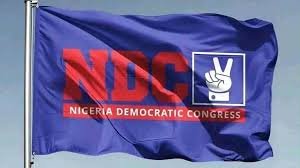
According to him, the failure to include the Peace Movement Party in the earlier proceedings amounted to a denial of fair hearing since the judgment directly affected the party’s interests.
“The court has ordered all parties to return to the position they occupied before the judgment of December 10, 2025, and directed the claimants to join all necessary parties to ensure the issues in dispute are effectually and completely determined,” Ekeocha said.
The lawyer further stated that all actions taken by INEC pursuant to the earlier judgment have now been reversed pending the determination of the substantive suit.
He explained that the recognition of the Nigeria Democratic Congress as a political party, the issuance of its certificate of registration, its inclusion in INEC’s official records and any appearance on ballot papers arising from the earlier judgment must be withdrawn until the court finally determines the matter. inecportal.com
“The recognition of the Nigeria Democratic Congress, the issuance of its certificate of registration, its inclusion in INEC’s records and any appearance on ballot papers arising from that judgment must be withdrawn pending the final determination of the substantive suit,” he said.
Ekeocha stressed that Friday’s ruling did not determine the substantive dispute over the registration of the NDC but merely reopened the case to allow all affected parties to participate.
According to him, the court only set aside its earlier judgment and ordered that the Peace Movement Party, whose interests may have been adversely affected, be joined in the proceedings before a fresh decision is taken.
“The matter has not been concluded. The court merely set aside its previous judgment and directed that the party whose interests were affected be joined so that all sides can be heard before a fresh decision is reached,” he added.
The ruling effectively returns the dispute over the registration of the Nigeria Democratic Congress to the Federal High Court for a fresh hearing with all relevant parties expected to participate.
The outcome of the fresh proceedings will determine whether the earlier order directing INEC to register the NDC as a political party will be upheld, modified or set aside after all interested parties have been heard.
Few days ago, a Federal High Court passed similar judgement which ordered INEC to stop recognising some political parties including African Democratic Congress (ADC).
Aside from the ADC, the other parties the high court directed INEC to deregister are the Action Peoples Party (APP), Action Alliance (AA), Accord Party (AP), and Zenith Labour Party (ZLP).
According to the court, the five political parties failed to meet the constitutional requirements to warrant their continued existence and participation in future elections.
The group behind the case told the court that the ADC and the four other parties performed poorly in both the 2023 general elections and by-elections conducted by INEC, thereby failing to win seats across key tiers of government.
The litigants insisted that the continued existence of the ADC and the other defendants as recognised political parties is unlawful and undermines the integrity of the country’s electoral system.
Responding, INEC vehemently opposed the action of the former legislators claiming that the five parties cannot be deregistered because they had won various seats in the states and National Assembly in the previous elections.
The electoral body attached various certificates of returns issued to their candidates that won previous elections.