



By Wale OGUNBANJO
(adewaleogunbanjo@yahoo.com)
Nigeria is currently embarking on some of the most ambitious highway projects in its modern history.
The 700-km Lagos–Calabar Coastal Highway, through nine coastal states, and the 1,068-km Lagos–Sokoto (Sokoto–Badagry) Superhighway, through seven states from the far north to the commercial capital in the south, are landmark projects that carry enormous promise. They are designed to reduce journey times, open under-served territories, stimulate commerce, attract investment, and bring the country’s regions together.
Properly executed, the roads could transform transportation, logistics, tourism, agriculture, and industrial development across large parts of the country.
However, there is a major danger that Nigeria has repeatedly ignored in the past. If adjoining land areas along these highways are not urgently subjected to structured physical planning and strict development control, many sections of these roads may eventually degenerate into congested urban corridors and chaotic community roads. In effect, roads designed as express highways may gradually lose their original purpose.
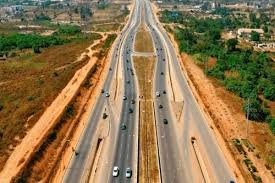
The challenge therefore is not merely road construction; it is corridor management.
A “corridor” refers to the entire stretch of land adjoining a road, and the economic activities and future development influenced by the road along its route.
Ribbon Development: The Silent Destroyer of Expressways
One of the most common consequences of poor corridor management is what urban planners describe as ribbon development — the continuous spread of buildings and commercial activities along both sides of a major road, forming a long strip of unplanned urbanization.
It usually starts innocently. A few filling stations appear. Shops emerge to serve motorists. Religious institutions establish camps and worship centres. Residential estates begin to spring up. Informal traders move closer to the road because of customer traffic. Before long, entire settlements emerge along the corridor.
At first glance, such development may appear economically vibrant. But over time, uncontrolled ribbon development becomes one of the greatest threats to the efficiency and safety of highways. The road gradually stops functioning as an expressway and instead becomes a congested local access road serving adjoining communities.
The Junction-Park-Market Syndrome
Another major observation across Nigeria is the pattern of development that emerges around junctions and intersections, especially along major highways. What often begins as a minor transport stop gradually evolves into a chaotic urban cluster.
Typically, a few taxis, minibuses, or Okada riders begin using a junction as an informal pick-up and drop-off point for passengers travelling into adjoining communities. As passenger activity increases, petty traders move in to serve commuters. Small kiosks and roadside stalls begin to appear. Over time, the location attracts more transport operators, more commercial activity, and more informal structures.
I like to describe this as the “Junction-Park-Market Syndrome.”
Before long, what started as a simple junction transforms into a congested interchange characterised by roadside trading, indiscriminate parking, traffic bottlenecks, pedestrian congestion, poor sanitation, and weak traffic control. In many cases, the situation gradually becomes institutionalised through the collection of levies and taxes by local authorities and government agents, thereby conferring unofficial legitimacy on what was originally an unplanned development.
This pattern is already visible across many Nigerian highways and is one of the major drivers of corridor congestion and ribbon development. When one imagines such unplanned settlements emerging every few kilometres along a 700-kilometre or a 1068-km corridor, the long-term implications become obvious.
The Lagos–Ibadan Expressway: A warning from the past
Perhaps the clearest Nigerian example is the 127.6-kilometre Lagos-Ibadan Expressway built in 1978. When originally developed, large portions of the corridor passed through relatively undeveloped land and sparse settlements. The road was intended to function primarily as a high-speed intercity expressway.
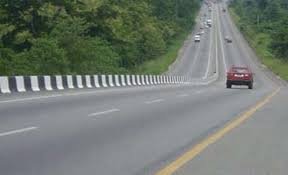
Over the years, however, adjoining land use became largely uncontrolled. Massive settlements gradually emerged along the corridor. Commercial activity spread onto road shoulders and setbacks. Religious camps expanded into major urban settlements. Filling stations multiplied with direct access onto the highway. Informal markets and transport loading points appeared along the carriageway. Pedestrian movement increased dramatically.
Settlements such as Mowe, Ibafo, and Arepo expanded rapidly until what were once separated communities increasingly merged into a continuous urban strip. The highway gradually evolved into a hybrid of an intercity expressway and a local community road. These two functions are fundamentally incompatible.
A modern expressway is designed for uninterrupted, high-speed movement. Once roadside trading, pedestrian crossings, indiscriminate parking, and uncontrolled access points dominate the corridor, travel efficiency collapses and accident risks increase significantly.
The Federal Road Safety Corps has repeatedly identified unsafe crossings, roadside activities, and indiscriminate stopping as major contributors to accidents on Nigerian highways. Many of these are not merely traffic management failures. They are planning failures.
Why This Matters Beyond Traffic
The implications go far beyond congestion. Perhaps most importantly, future road expansion becomes politically and financially difficult once buildings begin to encroach on the corridor. Demolitions become controversial. Compensation costs escalate. Enforcement weakens. What should have been prevented through planning eventually becomes a national crisis.
Ribbon development also creates inefficient urban sprawl. Infrastructure such as drainage, electricity, water supply, sewage systems, waste management, and policing become significantly more expensive to provide when settlements stretch continuously over long distances.
What Other Countries Do Differently
Many developed countries learned these lessons decades ago and responded through strict corridor planning and development control.
In the United States, the Interstate Highway System operates largely as a controlled-access system. Properties are generally not permitted direct access onto major highways, while commercial development is concentrated around planned interchanges.
The UK has the Restriction of Ribbon Development Act of 1935, which defined ribbon development as ‘the erection of buildings along the frontages of existing highways, each building with direct access to the latter.’ The Act empowered highway authorities to prohibit new building within specified distances — typically 220 feet (approximately 67 metres) from the centreline of classified roads — without explicit consent.
What Nigeria Needs to Do
Nigeria’s land-use culture presents a unique challenge. Open spaces not placed under defined ownership or functional use often become vulnerable to illegal occupation and unplanned activities. It may therefore be necessary, while construction is ongoing, to establish structured ownership and controlled land-use frameworks for adjoining areas. A dedicated transition or corridor management authority may even be required.
Comprehensive corridor master plans should define future residential areas, industrial clusters, logistics hubs, environmental buffer zones, commercial centres, agricultural preservation areas, utility corridors, and future expansion reservations.
The government should also consider seeking the passage of a National Highway Corridors Protection Bill. Such legislation could prohibit construction within a defined distance from highway rights-of-way, restrict markets and transport parks to designated locations, formally define and prohibit ribbon development, serve as interface between different tiers of government whose territories the roads traverse, and generally enforce the corridor masterplan.
Emerging communities along the corridors should be proactively identified and integrated into the planning framework through the provision of service roads, pedestrian bridges, underpasses, drainage systems, transport terminals, and properly organised commercial zones.
The Time to Plan Is Now
Nigeria has a rare opportunity. The current highway expansion programme could become the foundation for organised national growth and regional transformation. But if adjoining land areas are left unmanaged, the country may simply reproduce the same planning failures already visible along many older highways.
If Nigeria fails to physically plan and legally protect these highway corridors now, future generations may inherit hundreds of kilometres of congestion, slums, traffic chaos, and infrastructure inefficiency.
The time to act is before uncontrolled settlements emerge — not after.
The time is NOW!
*Ogunbanjo contributed this piece from Victoria Island, Lagos