


By Kikelomo ONIGBANJO

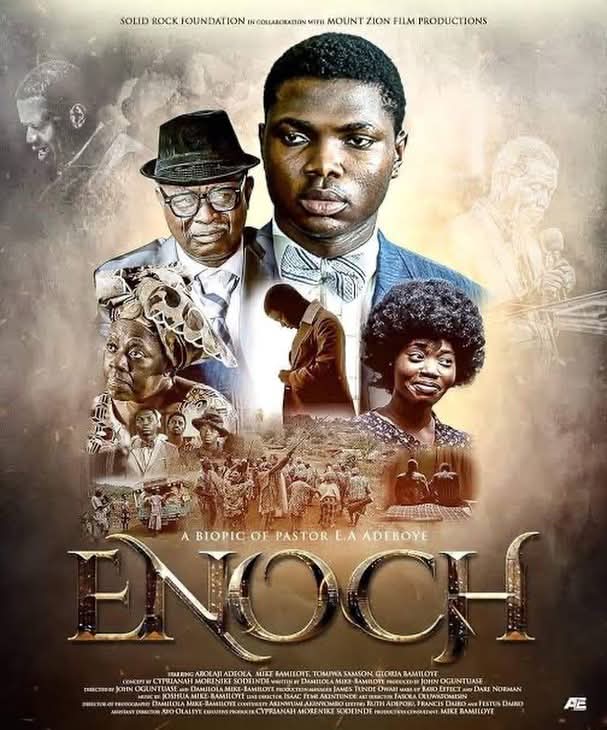
I recently came across Enoch on a list of recommended gospel movies and decided to watch it out of pure curiosity. I wanted to see what Damilola Bamiloye, of Mount Zion Faith Ministries fame, would do with a biopic of Pastor Enoch Adejare Adeboye, the General Overseer of the Redeemed Christian Church of God. More than that, I was curious about what really happened before he became the pastor whom many people either love deeply or criticise strongly.
Honestly, I was impressed.
I love biopics. There is something beautiful about watching past decades come alive on screen. The 60s, 70s, 80s, 90s, and even the early Y2K period have a unique texture that, when done well, can transport you completely. This film did that beautifully. From the costumes to the props, from the makeup to the language, everything felt intentional. It didn’t feel rushed or careless. It felt studied.
The attention to detail stood out immediately. The production team clearly did their research. The settings felt authentic. The hairstyles, clothing, and even the atmosphere of each scene captured the era convincingly. Nothing looked out of place. It wasn’t just about putting actors in old-fashioned clothes; it was about recreating a time and letting us sit inside it. That effort showed.
One of the most impressive details for me was the use of language and intonation, especially the Ede accent. It is one thing to tell a period story; it is another thing to tell it in a way that respects where it comes from. And that is one thing makers of biopics and epic movies should take note of. This film honoured its roots. The dialogue sounded natural and believable, not forced. That added depth and credibility to the storytelling.
Beyond being labelled a “Christian movie,” the film worked as a proper biopic. It showed Pastor Adeboye as a flawed human being before he became a global religious leader. We saw his struggles, his inner demons, his growth, his doubts, his journey. And even the challenges he faced when he was announced as the General Overseer of the Redeemed Christian Church of God. That human side made the story relatable. It reminded viewers that great spiritual leaders are also people with beginnings, challenges, and defining moments.
The pacing was steady, and the emotional tone felt balanced. It didn’t try too hard to preach; instead, it let you, as the viewer, form your own opinion of who the man was before the mantle was laid on him. It focused on telling a story rather than manipulating feelings. That is what made it effective. Faith was present, of course, but it was woven into the narrative rather than forced on the audience.
And then there were the closing credits.
Putting the cast’s pictures side by side with their real-life counterparts was pure creative brilliance. It was simple, yet powerful. It allowed viewers to appreciate the casting choices and see how closely the actors mirrored the real people. I found myself watching those credits longer than usual, almost studying them. It felt like a final nod to the film’s authenticity, which it worked so hard to maintain.
Overall, this was more than just another gospel film. It was a well-researched, thoughtfully produced biopic that brought history to life with care and respect. For lovers of biographical films and period storytelling, this one is worth watching.
Mount Zion has done something good!
8 stars.