

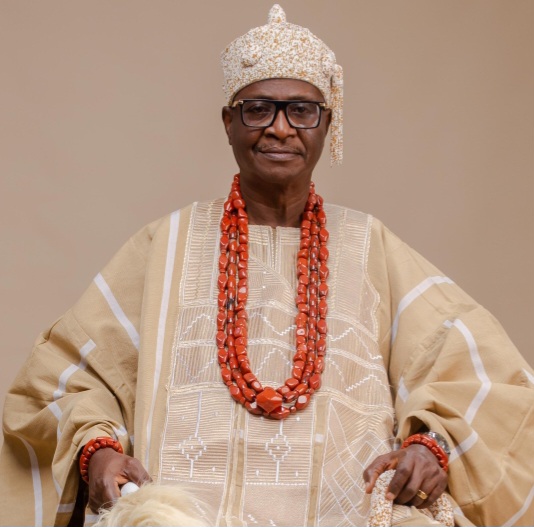

The Olosi of Osi Ekiti, Oba Stephen Alabi, a lawyer, was an accomplished professional before being chosen to be the king of that community. He was, at different times, NUJ chairman of Akure chapel of NTA as well as the chairman of Ondo State Chapter of the Nigerian Institute of Public Relations. The monarch was also chairman of the Sports Writers Association of Nigeria, Ondo State and later became the national president of the Sports Writers Association of Nigeria, among other leading positions. He spoke with Zapexpresssnews’ PADE OLAPOJU on the rivalry among Yoruba Obas and other varied issues. His conclusion: Ooni is the father to all. Excerpts
You are an accomplished journalist, a PR guru and a thriving Law lecturer. What prompted you to vie for the stool of Olosi?
I was born a prince and naturally I am entitled to the throne. But I never thought that I’ll be king or that I’ll even vie for the position. I think this is a fulfillment of destiny because after I became the Olosi, a lot of revelations were made to me concerning my ascension to the throne. My coming on the throne had been foretold a long time ago even before I was born. I wasn’t born or raised up in my community, but once my predecessor joined his ancestors, it was then that I realized that I could be called upon to become the king. I got the call from a number of good people to vie for the throne and it took me some time before I could take up the challenge. A fellow former journalist colleague who is the Kabiyesi of his own kingdom was the person who finally persuaded me and told me to go and contest for the position. I was the only person nominated by my ruling house. Eventually, we had three of us that were considered by the Ifa, and I was the one that the Ifa picked. I didn’t know that Ifa would be used until about 6.30p.m. on a Saturday preceding the day the Ifa divination would be done. The divination took place on a Sunday morning. I was at home in Akure when I received a call at about 2p.m. on Sunday when I was greeted with the exclamation: Kaabiyesi O! It was then it dawned on me that I was the one chosen to be king.
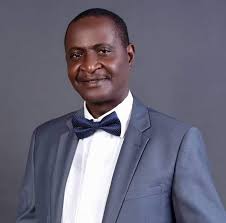
I never had the ambition of becoming king. I was a successful journalist. I went into Public Relations and I was very successful, then I decided to be a lawyer. I am a teacher of the Law and I’ve been teaching Law now for some time and my ambition was to become a Professor of Law for the rest of my life. It wasn’t part of my ambition to become the king of my community.
So, what difference would your being king bring to the town and its citizens? How would your experiences in service impact on your new assignment?
The experiences I’ve gathered in service have come in handy because the position of the Kabiyesi is actually that of the leader of the community even though what you deal with are essentially traditional. But there is really no difference in traditional leadership and leadership of other sorts. The only difference is that there is so much adulation for the king that sometimes it scares me, because within me, I know I am an ordinary person. But the tradition equates one with higher realm. So, you find everybody prostrating for you, greeting you kabiyesi o! And your word is law, so to speak. But the leadership I’ve had, had been democratic. It was leadership that was tempered by opinion from others and subject to concurrence of other leaders who usually form the executive. As a king, the experience has helped me to democratize my leadership of the community. I consult a lot because that has been part of my growing up as a leader of groups. So, it has become a part of me to consult people. I’m lucky here, I have a rich band of very experienced high chiefs and chiefs who surround me, helping me to administer the community. I also consult members of the community who have competency in areas that I need advice on. My wide consultations have helped me to deliver on my mandate as the Kabiyesi of the community.
Are you comfortable with the roles given to traditional rulers by the Constitution? Do you think they should be given more responsibility?
The Constitution actually does not assign any responsibility to the traditional rulers That is the plain truth. But there are too many expectations by the government from the Kabiyesis. As the king, you are in charge of your community and government would ask you questions on whatever happens in your community. But the Kabiyesis are not given the financial muscle to act. However, there’s a bill before the National Assembly that will give recognition to the National Council of Traditional Rulers. But that is still not enough for the traditional rulers as they (the rulers) have a lot of duties on their hands. I think it is only proper that we find a legal backing for all these duties so that the Kabiyesis can really perform.
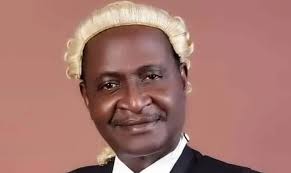
What roles would you suggest for traditional rulers to be included in the constitution?
First and foremost, we’ll talk about security. I believe and I think it’s possible that the traditional rulers can be empowered to play significant roles in securing their communities. For example, it would be good if the Kabiyesis can have a measure of control over security apparatuses, particularly those that are handled at the state level. For example, Amotekun. Some powers should be given to the Kabiyesi to be able to urgently deploy Amotekun to areas of need. Not that it would be the Kabiyesi sending SOS to them appealing for help. There is another security apparatus that we have in Ekiti. We call them Agro Marshals who have helped us to clear our forests of suspected kidnappers. We should have some measure of control over these agencies.
Then in terms of resources available to the palace, there should be certain allocations to the palace to be able to do some things. Everybody comes to the palace to ask for one thing or the other, the people, the chiefs, schools and the community table their needs at the palace. But the palace has no allocation from government whatsoever. So where there is no money, you are not in a position to satisfy the needs of groups within the community. So I believe that the Kabiyesis can be given constitutional roles to perform.
At the local government level, the traditional rulers can be part of the executive council of the local government. The chairman is elected, yes. But the Obas should not just be part of council of traditional rulers where you do monthly meetings and you talk about issues and you don’t have powers to implement your decisions. Maybe three or four traditional rulers or maybe first class Obas should be part of the local government executives that take decisions so that we are not just there wearing agbadas and holding meetings.
How true is the allegation of a Fulani man in a trending video claiming that they (herders) pay rulers of any host community for them to be able to stay long in the community?
I am not aware of that at all. I am a lawyer and I know that freedom of movement and the right to own property, given to every Nigerian no matter where they come from, are enshrined in our constitution.
But because of the things that have happened in recent time, we have had to tighten security in our communities. I don’t know how a Kabiyesi who claims to love his community and swore to protect his subjects will now receive money from strangers to come and disturb the peace of his community. It doesn’t sound normal to me. I have so many monarchs as friends and we compare notes. I do not know of anyone who does this.
Where do you place the rivalry between the Alaafin of Oyo and the Ooni and Oluwo who is claiming Yorubas are not from Ife?
I must be very honest with you, there is no cause for rivalry. The Ooni is the Number One monarch in Yorubaland. There’s no question of him being rivaled by any other monarch. The Alaafin is a respected monarch, but he is no rival to the Ooni. The Ooni of Ife is our father, the father to all of us who are sons of Oduduwa.
Now, everyone has a right to say whatever they like. But there’s no way you can re-write the history of the Yorubas. If you are not from Ife, then you are not Yoruba. It’s as simple as that.
If you are a king in Yorubaland and you say you are not form Ife, I wonder then how that person can be a king in Yorubaland. Alaafin himself has not said Oyo people are not from Ife, but he cannot rival the Ooni. There’s no cause for rivalry. The Ooni is the father of us all; the Number One king in Yorubaland and nobody quarrels with that. Alaafin is the king of Oyo. He owned an empire and that is political, not spiritual. Just like I have my kingdom here which was very big. But I cannot be claiming kingdom of old now. I should be moving with the times, trying to attract development to my community, not fighting wars that are already over. There was never a time Oyo and Ife were fighting over territories. Alaafin has his empire, but empires have become extinct.
Monarchs have the right to call themselves Imperial Majesties, but as far as I’m concerned, there’s no empire again. The Ooni is our father and I cannot, in good conscience, join anyone to detract from the special reverence that we give to the Ooni in Yorubaland and in our history. I am the Olosi of Osi Ekiti and there’s no doubt about it, we are from Ife.
Can you share some of your youthful days with us?
I loved sports a lot right from my primary school days, but I wasn’t good enough to make the teams of my schools except at the primary school level. I had always loved football and I think that inspired me to be part of the game in Nigeria and internationally. Football took me out and got me caned many times because of going out to play football and my parents didn’t like it, especially my Dad whenever l came home late looking dirty from playing football. I was not that troublesome, but some people would disagree with that. Maybe because I always insisted on my rights even right from my primary school days. I knew what I wanted and I didn’t allow people to cheat me. It got me into a number of arguments but I wasn’t engaging in physical fights. I was just one of the ordinary folks in town. But there was no group that I belonged to that I wasn’t very well known for good.

How do you plan to attract development to your community?
I’m so focused on that because my community is one of the most ancient communities in Yorubaland. I am the 30th Olosi, and that tells you how long the kingdom has been in existence. But by modern terms now, nobody talks about kingdoms again, you talk about what is happening in your community. We used to have our own district council before Osi District Council was merged with Ido District Council to form Ido-Osi Local Government. And that is the challenge we are facing. Most projects go to Ido, the headquarters of the local government. Projects don’t trickle down to Osi, whereas other communities in Ido-Osi like Ifaki, Ayetoro, Usi, (there’s absolutely no space again between Ido and Usi) are seen as independent communities. Whereas we in Osi are seen as Ido-Osi. And there’s a community between us and Ido, Igbole. So we are a distinct community. That is the challenge we’ve been having. Now we are trying to let government and other people know that Osi is a different community which also requires attention. If you site anything in Ido, it is not cited in Osi. So we are begging the government, begging people who want to do development to come to Osi, a very peaceful community with accommodating people to come and cite projects in Osi.
Since I became the Olosi of Osi Ekiti, we have been going round, meeting people, especially those who hold the reigns of power in this country so that we can get same developments happening here. It’s to early to talk about what has happened, but we know that things are happening. And by the grace of God, well get more developments into Ekiti.
What are the expected developments in Osi?
First, we have no government presence here in real terms. We have a Comprehensive Health Centre, we have a maternity and dispensary. We also have a secondary school built by the community in the 70s which has now become government secondary school. Other than these, there’s no other government presence, and we need government presence here. Everybody is clamoring for higher institutions. I am a Law lecturer and I believe in power of education to impact the community positively. I’ll like to see a university established in Osi Ekiti.
We have expanse of land that can accommodate a university. We have a private concern by one of our sons that is trying to do something for us. It is called Mercy International and they are building a health Institution. I do not know where they are going with that, but I believe it is a University of Medical Science in the making. Their buildings are springing up and I believe that is the destination. But we want more projects, particularly government projects, more developments, more people. Osi is well located, the town is less than 30 minutes to Ado-Ekiti, the state capital. Osi is also one of the gateways to the North through the South. There is no way you will site a university or a polytechnic here that will not attract students from all over Yorubaland, from parts of the North, particularly the Middle Belt. Osi is a good site for any higher institution. Well be happy to see a university sited here.
You are close to the grassroots. How would you advise government on insecurity? What can government do to tackle the insecurity menace?
There are three areas that need to be addressed by government. Number One is the issue of terrorists. That one is not part of our problems here in Ekiti State. Then there is the issue of kidnappings. Government is trying to curtail terrorism in the North. Kidnappings have reduced considerably. I believe the more we have security on ground, the better for us and the easier it is for us to curtail kidnappings. The recent announcement by the presidency that establishment of state police is a forgone conclusion makes me happy. Because with Amotekun, banditry and kidnappings have reduced. State police will further curtail kidnapping and other crimes.
The third problem is the issue of cultism among young people. It is the schools that can check this. We can take a cue from what is happening in private schools where you hardly hear of cultism. Perhaps the government can create units of police stations on each campus to check cultism because campuses are the bedrock of cultism. The moment we are able to have control over what happens on campuses, then cultism is likely to be reduced. Most importantly, we need to use technology to drive our security architecture. It is much easier to use technology to detect crime and places where criminals are planting cells of crime than to use old methods where you deploy more detectives into the forest looking for criminals. With technology, drones and GSM, it would be easier to fight crimes. There must be proper identification of Nigerians. People should not just move in and out without proper identification.
Any regrets so far?
What agitates my mind most is that people are moving out of the community for greener pastures and they are not coming back. If government can give us educational institutions or cite government establishments here then, people will stay and work here. For example, in Iyin Ekiti that now has a Federal University, definitely the population of that community will multiply. Ikere Ekiti that has an army barracks now, definitely the population will multiply. People move out of here because they cannot get the kind of jobs they want here. We need to encourage our people to come back home. Many retired Osi people stay put in places where they retire. We must encourage even people who are not from Osi to come and be part of us.
I’m trying to put up a mini-stadium that will accommodate a football field in place. The aim is to attract football teams from all over Nigeria to this serene place where they can train without distractions to prepare for their seasons. I am a football person and as a former football administrator, I believe we can do a small stadium here and also encourage our children to partake in sports. The sports industry is is huge. It is one of the most biding in the world and I’ll like Osi Ekiti to be part of it. In those days, Christs School, Ado Ekiti, Eyemote, Egbeoba, Atakumosa all these were schools that churn out sports stars. I hope that we’ll find the energy and the resources to do it.
Then, I want to encourage our people to go into forming. Today’s farming is really lucrative. By the next farming season, I will be going into farming to serve as an example to my people so that together we can make good money. People come in here from the Middle Belt to farm and they are making good money. They plant tomatoes and onions and they are making good money. One of these farmers just bought a brand new motorcycle yesterday worth more than a million naira from the proceeds of farming.
We are also trying to encourage senior citizens who have retired to come back home and also establish farms either on their own or as a group to attract resources from government.
What’s your view on Nigeria’s current position internationally in sports?
I was a board member of the Nigeria Football Association, the precursor of the Nigeria Football Federation. I was part of the team that re-introduced Nigeria to age group competitions after the ban of 1985. I was the pioneer General Manager of Sunshine Starts and Ekiti United. I’ve played major roles in sports in this country. I want to see how we can use sports to mobilize youths in our community. I am not too satisfied with where we are internationally in sports, even in local sports. I’ll like to see more competitiveness where it would be difficult to predict which team would win or who would emerge champions.
I appreciate the works that is being done by those in authority now. Gbenga Egbeleye is doing sufficiently well in NPFL, the NFL are also trying, but I believe they can do better. We are not getting the result we should get. Sundown did well in the FIFA Club World Cup, but there was no Nigerian club there. We are not even thriving in continental championships and neither are we doing well in athletics and other sports. I’ll like to see us fly our flag more with greater fulfillment than what we have done now and I believe it can be done. My bit is to advise and commend where necessary.
Don’t you think its better you catch them young and start poaching for stars from the grassroots?
Of Course! I ll give you two examples; Oluyemi Kayode, one of our athletics icons was discovered in Ado Ekiti and he became international. There’s another fellow, a student of Ejeoba School in Oba-Ile and he became an international champion. We must go back to those days where we did sports right from the schools. It is better to teach educated athletes tactics than to teach tactics to those picked from the streets. You get better results from educated athletes. I believe we need to develop more grassroots sports, than doing all these academies that are more focused on returns in terms of finances than returns in terms of performance from the field.
As a former practitioner, are you satisfied with the way journalism is being practised now?
I’m not too happy about some of the things we see on national television these days. I worked in the Current Affairs Department. What you see these days is something else. Not journalism. Journalists in position of interviewer are meant to respect their guests. They are to ask questions not in a combative way, but in a warm manner and you’ll get the same result. If you know your onions as an interviewer, you don’t need to turn the set to a battle ground. A journalist should not get involved, he’s not a show man. He’s representing the public and asking questions on their behalf. It is wrong to reduce journalism to what we see now on national television where interviewers bombard their guests with very combative questions and postures. That is degrading journalism. It is normal for guests not wanting to divulge information. But if you are skilled, you’ll still be able to get answers to your questions from your guests without insulting them. Journalism as a profession requires decorum, tact and wisdom, experience and knowledge to perform as a journalist.